A person with aphasia may sometimes say “yes” when they mean “no,” say “no” while their gesture suggests the opposite, or give different answers when the same question is asked again. For a caregiver or family member, the safest response is not to assume that the first spoken answer represents the person’s decision. Instead, slow the conversation down and confirm the message using another method, such as pointing, gestures, written choices, pictures, or asking the question in a different way.
This is especially important when the answer affects something meaningful: money, appointments, visitors, transportation, food choices, personal decisions, or anything involving safety. The goal is not to test the person with aphasia. It is to make it easier for them to show what they actually mean.
Aphasia affects language and communication differently from one person to another. Difficulty producing or understanding words should never be treated as evidence that the person cannot think, have preferences, or make choices. Good communication support gives the person more ways to express those choices instead of allowing the caregiver to make them automatically.
Why “Yes” and “No” Can Become Confusing With Aphasia
Yes/no questions are often useful because they reduce the amount of language a person needs to produce. Instead of answering, “I would rather stay home this afternoon because I am tired,” the person may only need to communicate “yes” or “no” to a simpler question such as, “Do you want to stay home?”
But a short answer does not automatically make communication reliable.
A person with aphasia may know exactly what they want while having difficulty accessing the correct spoken word. In another situation, they may have trouble understanding part of the question. They may also become tired, distracted, frustrated, or overwhelmed when several questions are asked quickly.
This can create situations such as:
- The person says “yes” but shakes their head.
- The person says “no” but reaches for the item you offered.
- The person answers “yes” to two questions that cannot both logically be true.
- The answer changes when the question is repeated.
- The person appears frustrated immediately after answering.
- The caregiver feels that the answer does not match what the person was trying to communicate moments earlier.
None of these situations should automatically be interpreted as indecision. They are signals that the conversation needs another way of confirming the message.
Do Not Treat the First Answer as Final When Something Feels Wrong
Imagine that you ask:
“Do you want coffee?”
The person says, “No,” but immediately points toward the coffee maker.
Rather than deciding that they do not want coffee, treat the spoken answer and the gesture as two pieces of information that do not yet agree.
You could show the coffee and tea containers and ask the person to point. You could write:
- COFFEE
- TEA
- NOTHING
Or you could hold up the coffee and ask, “This?” while giving enough time for the person to point, nod, shake their head, or respond in another way.
The same principle applies when conversations are much more important than choosing a drink.
If the answer appears inconsistent, confirmation is more useful than correction.
Avoid responding with, “You just said no,” or repeatedly demanding the same verbal answer. The objective is not to prove that the first response was wrong. It is to discover what the person is trying to communicate.
Use a Second Communication Channel to Confirm the Answer
One of the most practical habits for caregivers is to confirm important answers in a different way from the way the answer was first given.
If the person answered verbally, ask them to point.
If they pointed, ask for a nod or thumbs-up.
If they nodded, show two written choices.
If spoken words are difficult, use an object, photograph, drawing, written keyword, smartphone screen, or communication board.
For example:
Caregiver: “Do you want to go to the grocery store?”
Person with aphasia: “Yes.”
Instead of immediately getting ready to leave, you might show two options:
- GO TO STORE
- STAY HOME
Then ask the person to point.
If they say “yes” and independently point to GO TO STORE, you have two forms of communication supporting the same message.
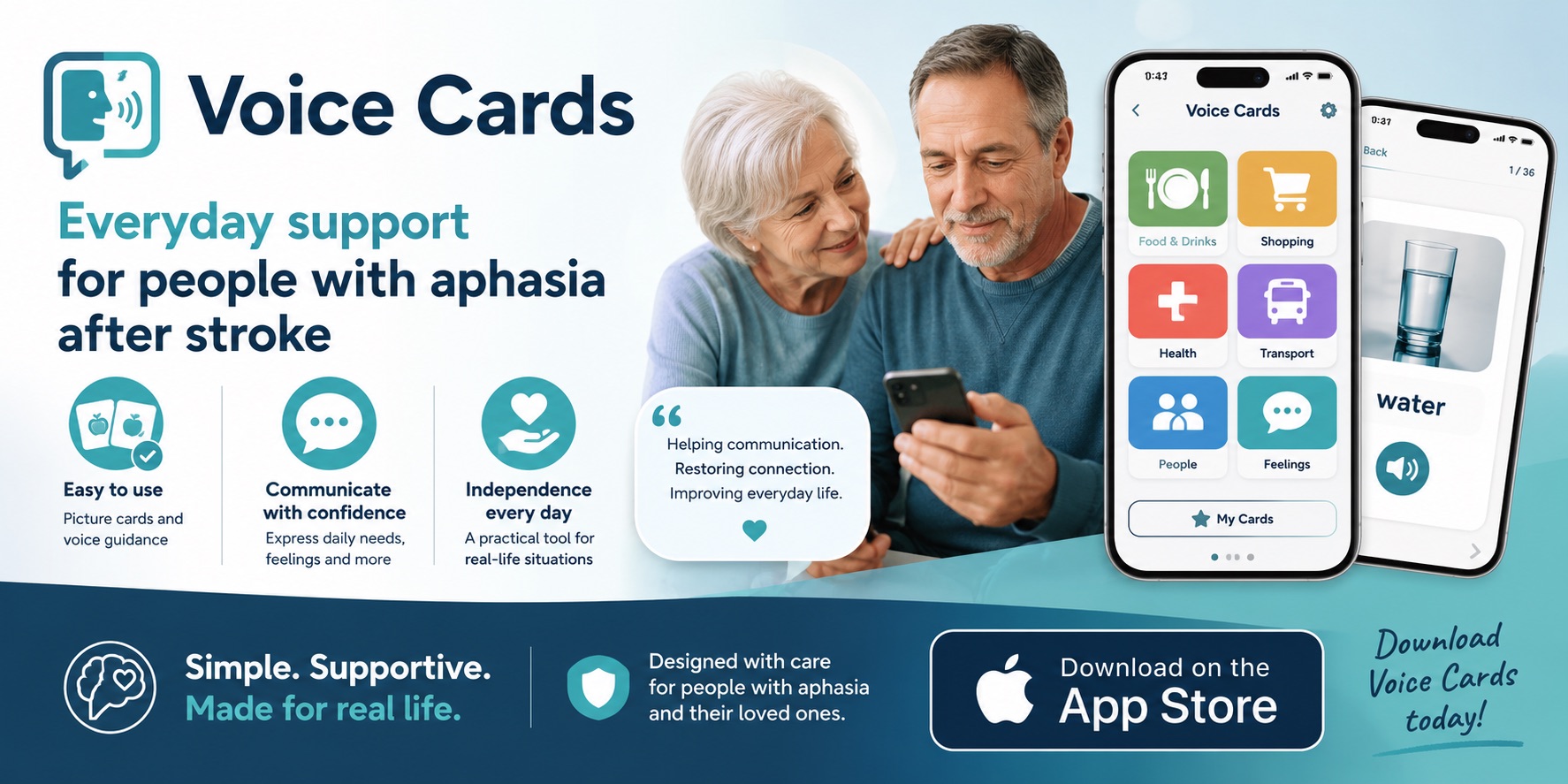
This approach can be especially useful for people who already use visual supports. A simple communication board for aphasia can give the person another route to an answer when speech becomes unreliable or tiring.
Show YES and NO Instead of Relying Only on Speech
A simple card can sometimes solve a surprisingly difficult communication problem.
Write:
YES
NO
NOT SURE
Use large, clear letters with plenty of space between the choices. Place the card where the person can comfortably see it and ask them to point.
Adding NOT SURE is important. Without it, every question forces the person into a yes-or-no decision even when they may genuinely be uncertain.
You can also use familiar symbols that the person understands, such as:
- thumbs up for yes,
- thumbs down for no,
- a question mark for unsure.
The best system is the one the person can use consistently. There is no reason to make it more complicated than necessary.
Some families keep a small YES / NO / NOT SURE card in several places: beside a favorite chair, near the kitchen table, in a bag used for appointments, and with other everyday communication materials.
Use Two Real Choices When Yes/No Questions Stop Working
Sometimes the easiest way to confirm a preference is to stop asking yes/no questions altogether.
Instead of:
“Do you want chicken?”
show two possibilities:
“Chicken or fish?”
Ideally, show the actual foods, photographs, packages, written words, or menu choices.
Instead of:
“Do you want to watch TV?”
try:
“TV or music?”
Instead of:
“Do you want to go out?”
try:
“Home or outside?”
Two concrete choices can reduce ambiguity because the person is selecting between visible alternatives rather than producing the correct verbal yes/no response.
Do not offer five or six choices at once unless you already know the person handles that comfortably. More options are not always more helpful. For many everyday decisions, two clear choices followed by additional choices if needed can make the conversation easier.
Ask the Same Question in a Different Way
If an answer matters and you are uncertain, change the question rather than simply repeating the identical sentence louder or faster.
Suppose you ask:
“Do you want Sarah to visit today?”
The person answers, “Yes.”
You can later confirm:
“Sarah comes today?”
and show SARAH / NO VISIT as written choices.
Or ask the opposite:
“Do you want Sarah to stay home today?”
If the person says “yes” to both opposite questions, the verbal yes/no response probably is not giving you enough information. Switch to another method rather than continuing the same pattern.
Keep the wording short and deal with one idea at a time. Long questions can accidentally contain several decisions.
Compare:
“Do you want to go to the pharmacy and then stop at the grocery store before we visit your sister?”
with:
“Pharmacy?”
Wait for confirmation.
“Grocery store?”
Wait again.
“Visit your sister?”
Breaking the plan into separate choices makes it easier for both people to know what has actually been agreed.
Pay Attention to Gestures and Actions
Communication is larger than speech.
A person may point toward the door, push a plate away, pick up their coat, smile when one choice is shown, move an object toward you, shake their head, make eye contact with a photograph, or use a familiar hand signal.
These actions can provide valuable context.
They should not be interpreted in isolation when the decision is important, but they can help you recognize when a spoken answer may not reflect the intended message.
For example, someone says “yes” when asked whether they want more food but repeatedly pushes the plate away. Instead of insisting that they said yes, confirm another way:
“More?”
Point to the food.
“Finished?”
Show the empty-plate or finished gesture the person knows.
The goal is to combine the available clues rather than allowing one word to override everything else.
Avoid Leading the Person Toward the Answer You Expect
Caregivers often need to make dozens of decisions every day, so it is easy to turn a preference into a question that already contains the preferred answer.
For example:
“You don’t want to go out because you’re tired, right?”
That question communicates what you expect before the person has had a chance to respond.
A more neutral approach is:
“Go out or stay home?”
Then show both options equally.
Another example:
“You want your blue shirt, don’t you?”
can become:
“Blue or green?”
while showing both shirts.
Neutral choices matter because people with aphasia still need opportunities to disagree, change their minds, prefer something inconvenient, or make ordinary decisions differently from the caregiver.
Supporting communication should increase a person’s control over everyday life, not quietly replace their choices with somebody else’s.
Take Extra Care With Important Decisions
You do not need to verify every casual yes or no three times. If someone clearly indicates that they want the window open, there is usually little reason to turn it into a lengthy communication exercise.
But confirmation becomes much more important when misunderstanding could have significant consequences.
Examples include:
- agreeing to or refusing an appointment,
- allowing someone into the home,
- making a purchase,
- handling money,
- changing plans involving transportation,
- sharing personal information,
- agreeing to an activity the person may not want,
- making decisions involving another family member,
- responding to questions from unfamiliar people.
In these situations, slow down and use more than one communication method whenever possible.
This is also why caregivers should be careful about automatically answering for someone with aphasia in stores, restaurants, offices, banks, or other public places. It may be faster, but speed is not always the most important goal.
When possible, direct the question back to the person and give them time to respond. If communication becomes difficult, support the answer rather than taking ownership of the decision.
Build a Personal Yes/No System That Works at Home
The most effective communication system is often not something a family buys. It is something the person with aphasia and the people around them gradually discover together.
You may notice that one method is particularly reliable:
- pointing to written YES and NO,
- thumbs up and thumbs down,
- nodding and shaking the head,
- pointing left for yes and right for no,
- selecting words or pictures on a phone or tablet,
- choosing between two physical objects.
Once you identify a method that works well, use it consistently.
If the person is comfortable using technology, a phone can also become part of the system. Large notes, favorite photographs, saved phrases, icons, or simple communication apps can make choices easier to show. The important part is that technology should support the person’s communication rather than become another task the caregiver controls. The same principle applies when helping someone with aphasia use a smartphone without taking over.
Keep Frequently Needed Choices Ready
You can prepare a small group of everyday words that are useful in your household:
- YES
- NO
- NOT SURE
- STOP
- MORE
- FINISHED
- HELP
- WAIT
- HOME
- OUTSIDE
- NOW
- LATER
These are not intended to replace conversation. They provide a backup when spoken language alone is not enough.
What to Do When Neither of You Can Confirm the Message
Sometimes every strategy seems to fail.
The person says one thing, points somewhere else, becomes frustrated when you try again, and you still do not know what they mean.
Continuing to ask more and more questions can make the situation worse.
Instead, acknowledge the problem:
“I know you’re telling me something. I’m not understanding yet.”
Then simplify.
Try identifying the general subject first:
- food?
- bathroom?
- phone?
- person?
- outside?
- pain or discomfort?
- something in the room?
Use objects, photos, writing, drawing, or gestures.
If the matter is not urgent and frustration continues to rise, it may be better to stop and return to the conversation later.
A communication breakdown does not mean either person has failed. Some messages simply take longer to uncover.
This becomes particularly important during conversations involving several people. Family members can easily start guessing, answering, correcting, and talking over one another. Strategies for keeping someone with aphasia involved in a group conversation can help prevent the person from disappearing from their own conversation while everyone else tries to solve the communication problem.
Make Sure Other Family Members Use the Same Approach
A communication strategy works better when the people who regularly spend time with the person understand it.
If a thumbs-up is the most reliable way to confirm yes, tell close family members.
If spoken “yes” and “no” are sometimes inconsistent, explain that too.
If the person needs written choices, keep the same simple card available.
If they need several seconds before answering, ask visitors not to repeat the question immediately.
Consistency can reduce frustration because the person does not have to learn a completely different way of communicating with every family member.
It also prevents a common problem: one person discovers that pointing works well, while another continues asking increasingly rapid verbal questions and concludes that the person with aphasia “doesn’t know what they want.”
The communication method may be the problem, not the person’s preference.
A Simple Household Rule
A useful family rule is:
If the answer is unclear, do not guess. Confirm it another way.
That one habit can prevent many everyday misunderstandings.
Frequently Asked Questions About Yes and No With Aphasia
Can someone with aphasia say “yes” when they mean “no”?
Yes, this can happen. Aphasia can affect the ability to understand or produce language, so the spoken word may not always match the person’s intended response. When the answer seems inconsistent, confirm it using pointing, written choices, gestures, pictures, objects, or another question.
Should caregivers still use yes/no questions with aphasia?
Yes/no questions can be very useful because they reduce the amount of spoken language required. The important point is not to assume that every verbal yes or no is automatically reliable. Learn how the individual communicates best and confirm important answers when necessary.
How can I check whether a person with aphasia really means yes?
Use a second method. For example, after a spoken “yes,” show written choices and ask the person to point. You can also use a thumbs-up gesture, physical objects, pictures, or rephrase the question. Agreement across two communication methods usually gives you more confidence that you understood correctly.
What if a person answers yes to two opposite questions?
Stop relying on the verbal yes/no response for that conversation. Show two concrete choices instead, such as HOME and OUTSIDE, or use objects, photographs, gestures, or written words. Repeating the opposite questions over and over is unlikely to make communication easier.
Should I correct someone when they say the wrong yes/no word?
The immediate priority is understanding the intended message, not correcting the word. A neutral response such as “I want to make sure I understand” is usually more helpful than pointing out that the person gave the “wrong” answer.
Should family members make decisions when yes/no answers are unreliable?
Communication difficulty should not automatically remove a person’s involvement in their own decisions. Whenever possible, provide alternative ways to show preferences and allow enough time to respond. For important legal, financial, medical, or decision-making questions, appropriate professional guidance may also be necessary.
Does an unreliable verbal answer mean the person does not understand the question?
Not necessarily. The person may understand the question while having difficulty producing the intended word. In other situations, understanding the question may also be difficult. This is why caregivers should avoid guessing based on one response and use additional communication methods to clarify what the person means.
The Most Important Rule: Confirm, Do Not Assume
When “yes” and “no” are not always reliable with aphasia, the solution is not to stop asking the person what they want. It is to give them more ways to answer.
Use short questions. Allow time. Show written choices. Offer two concrete options. Watch gestures. Use pictures or objects. Ask the same question another way when necessary. For important decisions, confirm the message through more than one communication channel.
Most importantly, keep the person with aphasia at the center of the conversation.
A communication difficulty can make a simple decision take longer, but the decision still belongs to the person making it.
Important Note
This article provides general educational information for people with aphasia, families, caregivers, and care partners. It is not medical advice and does not replace an individual evaluation or recommendations from a physician, speech-language pathologist, or other qualified healthcare professional. Aphasia and communication abilities vary considerably from person to person. If there is uncertainty about a person’s communication abilities, a significant change in their usual communication, or any concern about their health or safety, consult an appropriate healthcare professional.