Customer service can become unusually demanding when aphasia makes it harder to find words, follow rapid speech, remember a sequence of menu options, or repeat account details under time pressure. The goal is not to make another person take over. It is to change the communication setup so the person with aphasia can stay in control of the problem and the decision.
In short
A practical approach is to prepare the account information in writing, choose the least time-pressured channel available, ask the representative to use one question at a time, and keep a simple written record of what was agreed. When a phone tree or verification step becomes a barrier, requesting an alternative method is reasonable.
Choose the channel before you start solving the problem
A phone call is not automatically the best route just because it is the most familiar. If a company offers secure messaging, live chat, email, a branch visit, or a callback, the person with aphasia may communicate more accurately through a channel that provides visual information and time to respond. The best option depends on reading, writing, auditory comprehension, fatigue and confidence.
When the issue is complicated, it can help to write one sentence stating the goal before contacting support: “I need to change the billing address,” “I was charged twice,” or “I need to understand why this account was closed.” That sentence becomes a reference point if the conversation starts to wander.
Make automated phone menus less exhausting
Interactive voice menus can combine several difficult tasks: listening to unfamiliar options, holding them in memory, deciding quickly, and pressing the correct key. Use speakerphone if that makes it easier to take notes. Write down the menu path as you go, and do not hesitate to restart if the options were missed.
If the system accepts spoken commands but speech recognition repeatedly fails, look for keypad options or an operator route. A communication disability does not mean the caller should be forced to repeat the same unsuccessful voice command indefinitely.
Prepare for identity and account verification
Verification questions often involve numbers, addresses, dates and exact names. Put the information that can safely be prepared in advance on a private sheet: account number, service address, last four digits or other details the company commonly requests. Keep the sheet secure and do not share one-time security codes with anyone who unexpectedly contacts you.
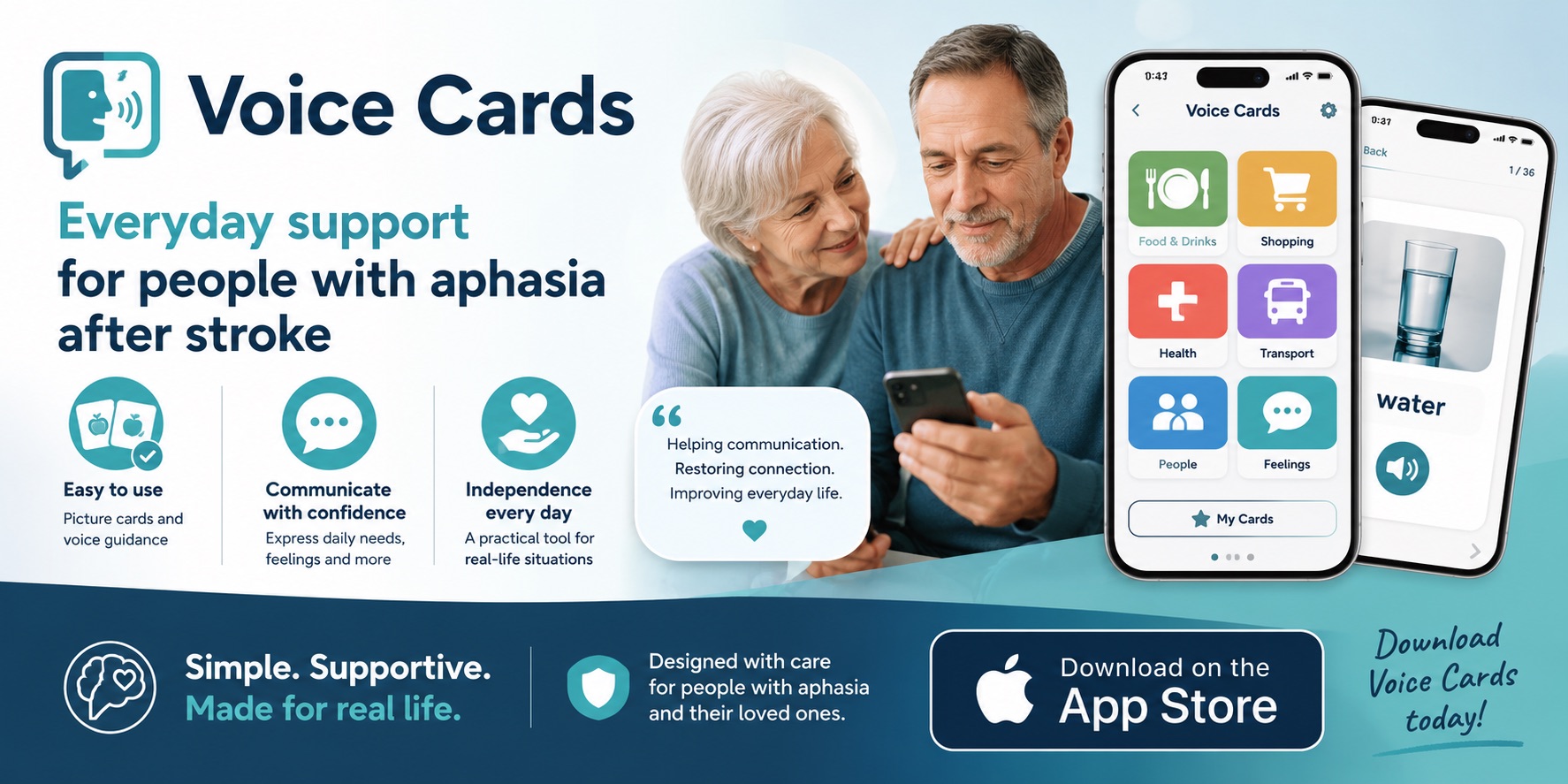
If a question is not understood, ask the representative to repeat it more slowly or say it in a different way. A useful phrase is, “I have aphasia. Please ask one question at a time and give me time to answer.” A communication card can make that request easier when explaining aphasia itself is difficult.
Use live chat without losing your own voice
Text chat removes the pressure of immediate speech, but long paragraphs can still be difficult to process. Ask the agent to send one instruction at a time. Copy important information into a separate note so it does not disappear when the session closes. Screenshots can also preserve reference numbers and agreed next steps.
Templates can help with recurring phrases, but they should serve the person, not replace them. Short statements such as “Please wait while I type,” “Can you give me two choices?” and “Please confirm the final amount in writing” are often more useful than a long explanation of aphasia.
Bring in a communication partner without handing over the decision
A family member or friend can support the interaction by taking notes, repeating information, or helping organize choices. The representative should still address the person with aphasia whenever possible. Before the contact begins, agree on the helper’s role: note-taker, reader, speech support, or authorized account representative.
For accounts that require formal authorization, a company may have its own rules for adding another person. Set this up before an urgent problem if possible. Having authorization does not mean the helper should automatically make every decision.
Know when to escalate
Escalation is useful when the communication method itself prevents the issue from being resolved, when an agent repeatedly ignores a request for accessible communication, or when different representatives give conflicting instructions. Ask for a supervisor, accessibility team, written confirmation, or a reference number.
At the end, summarize the outcome in one or two sentences and ask the agent to confirm it: what will happen, who will do it, and by what date. This reduces the burden of reconstructing a long conversation later.
Practical checklist
- Write the single goal of the contact before you begin.
- Prepare account details privately and securely.
- Ask for one question or one instruction at a time.
- Request written confirmation of amounts, dates and next steps.
- Save the case or reference number.
- Agree in advance what a communication partner will and will not do.
Frequently asked questions
What if a phone agent keeps talking too fast?
Say directly that you have aphasia and need slower speech, short sentences and time to respond. If that does not work, ask for another channel or a supervisor.
Is live chat always easier than a phone call?
No. It can be easier for someone who reads and types well, but it may be harder for a person with significant reading or writing difficulties. Use the channel that fits the individual communication profile.
Should a family member speak for the person with aphasia?
Only as much as the person wants or needs. Support should preserve the person’s participation in decisions rather than automatically replacing their communication.
Bottom line
Customer service becomes more manageable when the communication environment is adjusted: less time pressure, fewer pieces of information at once, written confirmation and a clear role for any helper. Aphasia changes language processing; it does not remove the person’s right to understand the problem and make the decision.
Related guides
- Numbers and Aphasia: Practical Strategies for Money, Dates, Phone Numbers and Medication Labels
- Writing Emails and Text Messages With Aphasia: Dictation, Templates and Proofreading Without Losing Your Voice
- How to Help Someone With Aphasia With Banks, Phone Calls and Forms Without Taking Over
Sources and further reading