Quick answer: a person with aphasia should not have to invent a communication strategy in the middle of an emergency. Prepare a one-page emergency sheet, an aphasia ID card, medication and allergy information, emergency contacts, and a small set of communication supports before they are needed. Keep one copy in a wallet or bag, one at home, and a digital copy on the phone. If speech or understanding suddenly becomes worse than the person’s usual aphasia, or a new neurological symptom appears, treat it as a possible stroke emergency and call 911.
What should an aphasia emergency plan contain?
The best emergency plan is short enough to be used when everyone is under pressure. The National Aphasia Association recommends preparing an emergency folder with identification, contacts, medical information, an aphasia alert, and communication supports.
A practical one-page sheet can include:
- full name and a recent photo;
- the words “I have aphasia” near the top;
- what the person understands well and what is difficult;
- the communication methods that help most;
- emergency contacts;
- current medications and important allergies;
- relevant health conditions;
- the preferred hospital or health system when appropriate;
- a short note explaining that extra response time may be needed.
Do not turn the emergency sheet into a complete medical chart. First responders need information they can scan quickly. A separate medication list or medical summary can carry additional detail.
Create an aphasia ID card that explains the problem immediately
An aphasia ID card can prevent a communication difficulty from being mistaken for confusion, intoxication, lack of cooperation, or inability to understand. The National Aphasia Association and the American Stroke Association provide aphasia identification resources designed for this purpose.
A useful card might communicate four things:
- I have aphasia.
- I may understand more than I can say.
- Please give me time and ask one question at a time.
- If needed, contact this person: name and phone number.
The wording should match the individual. Someone who has difficulty understanding long spoken sentences may prefer “Use short sentences and write key words.” Someone with strong reading but limited speech may prefer “Please show me written choices.”
Carry the card somewhere another person can reasonably find it: wallet, phone case, lanyard, emergency pouch, or medical alert bracelet. Keep the same message in the phone’s Medical ID or emergency information feature when possible.
Make medical information readable in seconds
In an emergency, the communication barrier and the medical problem happen at the same time. A person may know exactly what medication they take but be unable to retrieve the name under pressure.
Use a clear list rather than paragraphs:
| Information | Example format |
|---|---|
| Medication | Name — dose — when taken |
| Allergy | Substance — reaction if known |
| Condition | Stroke history, diabetes, seizure disorder, heart condition, other relevant diagnosis |
| Contact | Name — relationship — phone |
| Communication | Yes/no works well; written choices help; allow extra time |
Review this information whenever medication changes. An emergency card that still lists a drug stopped two years ago can create confusion.
What communication tools help during a 911 call or ER visit?
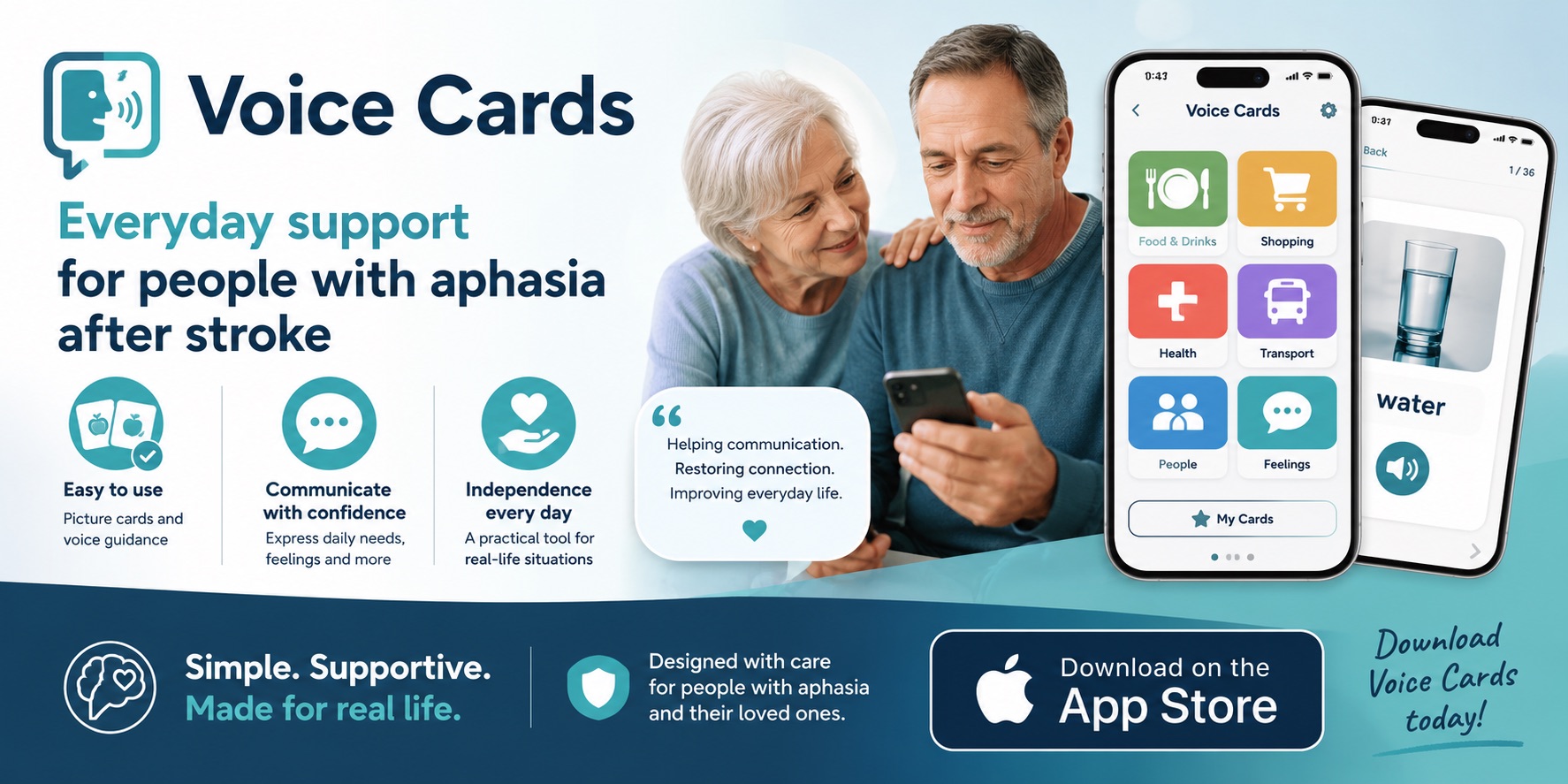
Aphasia affects people differently, so there is no single best board or app. The National Aphasia Association suggests supports such as yes/no cards, gestures, writing, communication boards, body pictures, and short symptom phrases.
Yes/no support
A printed card with large YES and NO areas can reduce the pressure to produce speech. Confirm important answers more than once if the person’s yes/no reliability varies.
Body and symptom board
A simple body diagram can help someone point to where something hurts. Add a few high-priority words such as chest pain, trouble breathing, dizzy, headache, nausea, fall, allergy, and pain scale. The board should support communication, not replace medical assessment.
Written choices
Instead of asking “What happened?”, a responder or family member may offer two or three written possibilities. For example: fell / pain started / trouble breathing. The person can point, reject, or add information.
Phone notes and photos
Saved photos of medications, a home address, a family member, or a communication page can be useful when speech is difficult. Keep the most important items easy to reach rather than buried in dozens of folders.
What should a family member or care partner do?
A care partner can make communication more efficient without taking control away from the person with aphasia.
- Tell staff that the person has aphasia before a misunderstanding develops.
- Ask staff to address the person directly.
- Give the person time to answer before stepping in.
- Use the prepared communication tools rather than guessing.
- Confirm essential information such as pain location, medication, allergies, and consent.
- If the person is not understood, explain the usual communication pattern: what is normal for them and what is new.
That final point can be especially important. A family member may be the person most able to say, “This word-finding problem is much worse than usual,” or “This is their normal speech pattern after the previous stroke.”
A sudden change in aphasia can be a medical emergency
Someone who already lives with aphasia can still have another stroke. The American Stroke Association warns that a new or sudden worsening of speech, word-finding, weakness, balance, vision, or other neurological function can signal stroke. The B.E. F.A.S.T. warning signs include balance loss, eye/vision changes, face drooping, arm weakness, speech difficulty, and time to call 911.
Do not assume a sudden communication change is “just the aphasia.” If speech or understanding changes abruptly, especially with other stroke signs, call 911. The American Stroke Association also advises not to drive yourself to the hospital in a suspected stroke emergency.
If the person has chronic aphasia, it helps to keep a short description of their usual baseline communication. This gives emergency staff a reference point for identifying what has changed.
Practice the plan when there is no emergency
A plan works better when it is familiar. Once every few months, rehearse a simple scenario:
- Where is the emergency sheet?
- Can the person find and show the aphasia ID card?
- Can a family member locate the current medication list?
- Can the person point to pain or a symptom on the board?
- Is the emergency contact number current?
- Can the phone be used to call 911 without searching through menus?
Update the kit after a move, medication change, new diagnosis, phone-number change, or change in communication abilities.
Frequently asked questions
Should the emergency card say that aphasia does not mean low intelligence?
It can. A short phrase such as “Aphasia affects language, not intelligence” may help, but the card should remain brief and focused on what responders need to do.
Is an app enough?
Not always. A phone can be locked, discharged, damaged, or separated from the person. A printed backup is useful.
Should I list every diagnosis?
Prioritize information relevant to emergency care and keep a fuller medical record separately. Ask the person’s healthcare team what should be included in their individual emergency summary.
What if the person cannot reliably answer yes/no questions?
Use another method—pictures, pointing, written choices, gesture, partner-assisted scanning, or an AAC system that the person already knows. Do not assume yes/no is reliable for everyone with aphasia.
This article is for general education and emergency preparation. It is not individual medical advice. Sudden new or worsening stroke symptoms require emergency medical evaluation.
Sources and resources
- National Aphasia Association: Experiencing an Emergency or Medical Situation
- National Aphasia Association: Aphasia ID Card and Other Identification
- National Aphasia Association: CommunicationFIRST Hospital Toolkit
- American Stroke Association: Stroke Symptoms and B.E. F.A.S.T.
- American Stroke Association: Recognizing a Second Stroke
More practical communication guides are available on AphasiaGuide.com.