Aphasia games can be a gentle way to spend time together, support everyday communication and make conversations feel less stressful. The best games for adults with aphasia are not about testing someone, correcting every word or turning family time into a lesson. They are simple, flexible and respectful activities that give a person more time, more choice and more ways to join in.
For many families, the hardest part is not finding a complicated game. The real challenge is finding something that feels natural, adult and relaxed. A good aphasia-friendly game should create connection without pressure. It should allow pointing, gestures, facial expressions, writing, drawing, cards, pictures or short words. It should also make space for silence, pauses and different ways of responding.
This guide shares practical aphasia games for adults that can be used at home, during family visits, in quiet social settings or as part of a calm daily routine. These ideas are not medical advice and they are not a replacement for professional support. They are everyday communication-friendly activities designed to make shared moments easier, warmer and more enjoyable.

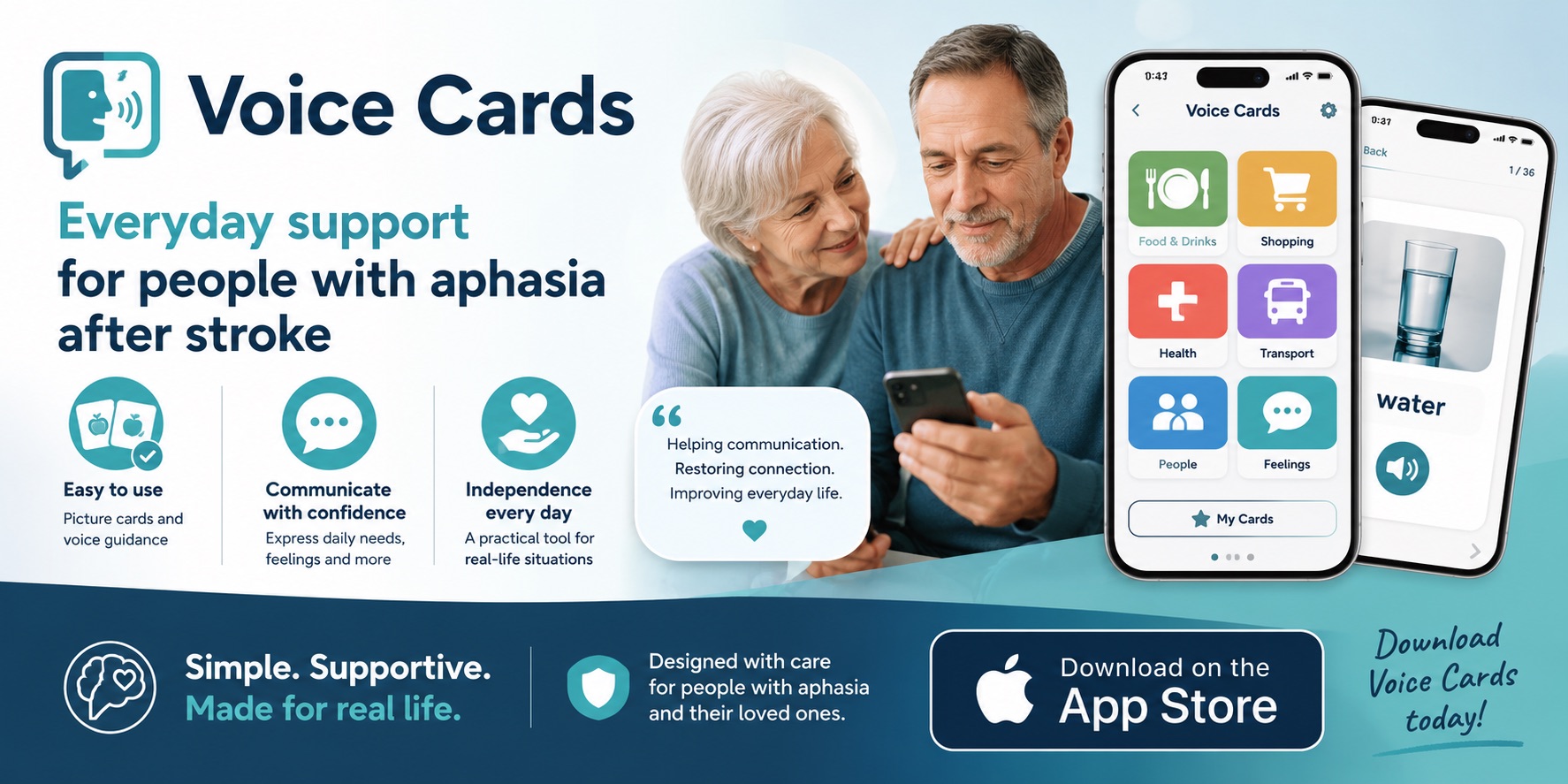
SmallDesk Voice Cards
A simple voice cards app for everyday communication. Currently available for iPhone. Android version coming soon.
What Makes a Game Aphasia-Friendly?
An aphasia-friendly game is not defined by the box it comes in. It is defined by how it is played. Even a simple card game can feel difficult if the rules are rushed, the room is noisy or everyone expects quick spoken answers. At the same time, a very ordinary activity can become a great game when it gives the person enough time, clear choices and different ways to respond.
The best aphasia games for adults usually have a few things in common. They are easy to understand, slow enough to follow and flexible enough to change. They do not depend only on speaking. They use pictures, objects, pointing, matching, sorting, choosing, yes or no answers, short phrases or shared actions. They also keep the adult dignity of the person at the center. The goal is not to make someone feel like a child. The goal is to make communication feel possible.
A good game should also be easy to stop. Some days may be better than others. A person may enjoy a game for ten minutes one day and only two minutes the next. That is completely fine. A relaxed game is not a performance. It is simply a shared moment.
How to Choose Aphasia Games for Adults
When choosing aphasia games, start with the person, not with the activity. Think about what they liked before communication became harder. Did they enjoy music, cooking, cars, gardening, sports, animals, family photos, travel, cards, puzzles, films, fashion, home projects or jokes? A familiar theme can make the activity feel more personal and less forced.
It also helps to choose games with simple rules. If a game needs a long explanation, too many steps or fast reactions, it may become frustrating. A better option is a game that can be understood by watching one example. If you can show the first move instead of explaining everything, the game is usually easier to join.
The setting matters too. A quiet room, one person speaking at a time, good lighting and a small table can make a big difference. Turn off background television or loud music if it makes concentration harder. Keep the pace calm. Use short sentences. Give time for a response. Most importantly, avoid speaking for the person too quickly. The game should create opportunities, not pressure.
Picture Matching Games
Picture matching is one of the easiest aphasia games to set up at home. You can use printed photos, family pictures, magazine images, food cards, travel photos, animal pictures or everyday object cards. Place a few images on the table and ask the person to match pairs, choose favorites or group similar items together.
For example, you can place pictures of different foods on the table and ask, “Which one would you choose for dinner?” The answer can be given by pointing. You can then continue with simple follow-up choices, such as “Hot or cold?” or “Today or tomorrow?” This turns a simple game into a real-life conversation.
Another version is matching objects to pictures. Place a cup, spoon, key, book or remote control beside printed images of the same items. The person can match the object to the picture or choose which object belongs in a room, bag or activity. This can feel natural because the game is based on real life rather than abstract questions.
Family Photo Games
SmallDesk Voice Cards
A simple voice cards app for everyday communication. Currently available for iPhone. Android version coming soon.
Family photos can be powerful because they already have meaning. They can help start conversation without requiring a long spoken answer. A simple game is to place three or four photos on the table and ask the person to choose one. Then you can ask gentle questions around the picture, such as “Was this at home?” “Was this a holiday?” or “Do you like this photo?”
You can also play a sorting game with family photos. Sort them by people, places, seasons, celebrations or memories. The person can point, nod, smile, gesture or say short words if they want to. The game works even when speech is limited because the photo carries part of the meaning.
Another idea is “Who is in the photo?” but only if it feels comfortable and not like a quiz. Keep it light. If the person cannot find a name, do not turn it into a test. You can offer two choices or simply say the name warmly and continue the conversation. The point is connection, not correction.
Yes or No Games
Yes or no games are simple, but they can be very effective when they are respectful and not childish. The key is to ask meaningful questions, not random quiz questions. You can use photos, objects, music, foods or daily choices.
For example, show a picture of a beach and ask, “Do you like this place?” Show a cup of tea and ask, “Tea today?” Show a family photo and ask, “Good memory?” These small questions can create conversation while keeping the response simple.
You can also turn yes or no into a preference game. Ask questions such as “Coffee or tea?” “Morning or evening?” “Music or quiet?” “Garden or living room?” If the person has difficulty saying the words, show both options as pictures or objects. Let them point. This makes the game useful in everyday life without making it feel like a formal exercise.
Would You Rather Games
“Would you rather” can be a great aphasia-friendly game when it is kept simple and visual. Instead of long funny questions, use clear choices. For example, “Would you rather sit in the garden or watch a film?” “Would you rather have soup or a sandwich?” “Would you rather listen to music or look at photos?”
This type of game works well because it gives the person a choice instead of demanding a perfect spoken answer. It can also lead naturally into real decisions. If the person points to music, you can play a favorite song. If they choose the garden, you can move outside for a few minutes.
To make this game easier, use only two options at a time. Too many choices can become confusing. You can also use cards with pictures or write the two options in large, clear words. Give the person time to look, think and respond in their own way.
Sorting Games With Everyday Objects
Sorting games are simple, adult and easy to adapt. You can use real objects from the home, such as cutlery, socks, buttons, tools, recipe cards, postcards, photos, coins, fabric samples or small household items. The person can sort them by color, use, room, size, shape or personal preference.
For example, place several kitchen items on the table and sort them into groups: things for drinks, things for meals and things for cooking. You can also sort clothes by season or photos by place. This kind of activity allows participation without constant speaking.
Sorting games can also create natural conversation. You might say, “This one belongs in the kitchen,” or “This one is for the garden.” The person can agree, disagree, move the object or show another choice. The interaction becomes more important than the rules.
Music Games
Music can make aphasia games feel warmer and less formal. A simple game is to play short parts of familiar songs and let the person choose whether to continue or skip. You can use thumbs up, thumbs down, pointing or facial expressions as answers.
Another idea is a “favorite song” game. Write or print the names of a few artists, songs or music styles. The person can choose one. If reading is difficult, use album covers without focusing on the text, personal memories or simple images connected to the music. You can also ask simple questions such as “Happy song?” “Dance song?” or “Old favorite?”
Music games do not need many words. Listening together, tapping a rhythm, smiling, choosing the next song or sharing a memory can all be part of the activity. The game should stay relaxed and enjoyable.
Card Games With Simple Rules
Traditional card games can work well if the rules are simplified. Matching colors, matching numbers, choosing higher or lower cards, sorting cards by suit or playing a slow version of a familiar game can all be helpful ways to spend time together.
Use only a small number of cards at first. Too many cards can make the table visually busy. You can start with red and black sorting, then move to matching numbers or choosing the highest card. If the person already enjoyed card games before, familiar cards may feel adult and comfortable.
Do not worry about playing by official rules. It is perfectly fine to create your own version. The best version is the one that the person can enjoy without feeling rushed or corrected.
Board Games That Can Be Made Aphasia-Friendly
Some board games can be adapted into aphasia-friendly games by reducing the rules and slowing down the pace. Games that involve matching, moving pieces, choosing images or taking turns are often easier than games that require fast reading, complex strategy or long spoken answers.
A simple board game can be played with fewer pieces, fewer cards and fewer rules. You can remove time limits, ignore complicated scoring or play cooperatively instead of competitively. If the person seems tired or frustrated, stop the game before it becomes stressful.
Games should never feel like a test of intelligence. Aphasia affects communication, not the person’s value, personality or adult identity. Keep the tone respectful. Speak naturally. Celebrate participation, choices and shared enjoyment rather than correct answers.
Word Games Without Pressure
Word games can be enjoyable for some adults with aphasia, but they need to be handled carefully. Avoid fast quizzes, public guessing or pressure to say the perfect word. Instead, use gentle word activities that allow hints, choices, pointing and plenty of time.
One simple idea is a category game. Choose a category such as foods, animals, places, music or sports. Show pictures and invite the person to choose items that belong in that category. If they want to say the word, they can. If not, pointing is enough.
Another idea is a “finish the phrase” game using familiar expressions, songs or daily phrases. Keep it light and stop if it becomes frustrating. Some people may enjoy this, while others may not. The best approach is to follow the person’s reaction rather than forcing the activity.
Guessing Games With Objects
Guessing games can be played with real objects in a bag or box. The person can feel or look at an object and choose from two or three picture options. You can also reverse the game and let the person choose an object for you to guess.
This kind of game can be playful without requiring long speech. It uses touch, sight, gestures and shared attention. Everyday objects work best: a spoon, key, brush, small towel, cup, fruit, coin or remote control. Avoid objects that feel too childish unless the person genuinely enjoys them.
Keep the tone friendly. If the answer is not clear, offer choices instead of correcting. You can say, “Is it this one or this one?” and show two options. This keeps the game moving without pressure.
Drawing and Doodle Games
Drawing can be a helpful way to communicate during games because it gives another route besides speech. The goal does not have to be artistic skill. Simple lines, shapes and quick sketches are enough.
You can play a relaxed drawing game where one person draws something simple and the other person chooses what it might be from two or three options. You can also draw together on the same page, adding one small detail at a time. For example, one person draws a house, the other adds a tree, then someone adds the sun.
Doodle games work best when there is no judgment. Do not laugh at a drawing unless the moment is clearly shared and positive. The drawing is not the point. The shared attention and communication are the point.
Food and Meal Choice Games
Food-based games can feel natural because they connect directly to daily life. You can use pictures of meals, snacks, drinks, fruits or favorite dishes. Ask the person to choose between two options, sort foods into groups or build a simple menu for the day.
For example, place picture cards for breakfast foods on the table and ask the person to choose what looks good. You can also ask, “Sweet or savory?” “Hot or cold?” “Now or later?” These are simple choices, but they can support real communication.
This type of game can be especially useful because it does not feel like a separate activity. It is part of everyday decision-making. The person is not just playing. They are expressing preference and control.
Memory Box Games
A memory box can include personal objects, photos, postcards, souvenirs, fabric pieces, small tools, recipe cards, hobby items or anything connected to the person’s life. The game can be as simple as choosing one object and talking around it.
You can ask gentle questions: “Is this from home?” “Was this important?” “Do you like this?” “Old or new?” The person can point, nod, gesture, smile, write, draw or say a short word. If the item brings up a story, let the story unfold slowly.
Memory box games should be guided by respect. Some objects may bring joy, while others may feel too emotional. Follow the person’s mood. The game should create warmth, not overwhelm.
Online Aphasia Games and Digital Activities
Online aphasia games can be useful when they are simple, visual and easy to control. A tablet or phone can offer picture choices, matching activities, music, photo albums, drawing tools, simple puzzles and communication cards. The most important thing is that the screen should not become too busy.
Choose activities with large buttons, clear images and minimal distractions. Avoid fast timers, small text, complicated menus or games that punish slow responses. A digital game should give the person time and control.
Apps can also support communication during games. For example, a person can tap a card, choose a message, show a picture or type a short word. This can help the activity feel more interactive, especially when speech is difficult in the moment.
Aphasia Games for Family Visits
Family visits can sometimes become overwhelming when many people speak at once. A simple game can help structure the visit and make communication calmer. Choose games that involve turn-taking, pictures or shared objects rather than fast conversation.
A good family game might be choosing favorite photos, voting on songs, sorting old pictures, choosing a film for later or playing a simple card-matching game. One person should explain the activity slowly and clearly. Others should wait, listen and avoid interrupting.
SmallDesk Voice Cards
A simple voice cards app for everyday communication. Currently available for iPhone. Android version coming soon.
Small groups usually work better than large groups. If several people are present, keep the activity quiet and organized. The person with aphasia should never feel like they are being watched by an audience. The game should feel like inclusion, not performance.
Aphasia-Friendly Game Ideas by Situation
| Situation | Game idea | Why it works |
|---|---|---|
| Quiet morning at home | Choose today’s drink, breakfast or music from picture options | It connects the game to real choices and daily comfort |
| Family visit | Pick a favorite photo and sort photos by people or places | It creates conversation without needing long spoken answers |
| Short break during the day | Match objects to pictures or sort objects by room | It is simple, visual and easy to stop at any time |
| Relaxed evening | Choose songs, guess familiar music or vote on a film | It supports shared enjoyment without pressure to speak |
| Using a phone or tablet | Tap picture cards, draw together or choose from simple visual options | It gives another way to communicate when speech feels hard |
Games to Avoid or Adapt Carefully
Not every game is a good fit. Fast games, loud games, games with complicated rules and games that depend on quick spoken answers may be stressful. Timed word games can also feel uncomfortable because they can turn communication into pressure.
This does not mean these games are always impossible. Some people may still enjoy them if the rules are changed. Remove the timer, reduce the number of choices, play in pairs, allow pointing or writing and focus on fun rather than score. If the person seems tense, tired or frustrated, change the activity or stop.
It is also important to avoid games that feel childish unless the person clearly enjoys that style. Adults with aphasia deserve adult themes, adult respect and activities connected to their real interests. A game can be simple without being babyish.
How to Make Any Game Easier
Most games can become more aphasia-friendly with a few small changes. Use fewer choices. Slow the pace. Give one instruction at a time. Show an example instead of giving a long explanation. Let the person point, gesture, write, draw or use a communication card. Keep the environment quiet. Pause often.
It also helps to use confirmation. If you are not sure what the person means, repeat what you think they chose and ask if that is right. For example, “You want this one?” or “You mean the garden?” This shows respect and helps avoid misunderstandings.
Do not correct every word. Do not rush to finish sentences unless the person clearly wants help. Do not turn the game into a lesson. A calm, respectful atmosphere is more important than completing the activity perfectly.
Simple Aphasia Games You Can Try Today
SmallDesk Voice Cards
A simple voice cards app for everyday communication. Currently available for iPhone. Android version coming soon.
If you want to start with something easy, choose one of these simple ideas. Place three family photos on the table and ask the person to choose one. Put two drinks in front of them and ask which they prefer. Play three short song clips and let them choose the favorite. Sort a small group of objects by room. Match food pictures to meals. Draw a simple object and offer two possible answers. Choose a film using pictures instead of a long conversation.
These games may seem small, but small moments can matter. A person does not need to speak in full sentences to take part, choose, react, laugh, disagree or share a preference. Aphasia-friendly games work best when they make room for all of those responses.
FAQ About Aphasia Games
What are aphasia games?
Aphasia games are simple activities designed to support communication, choice and shared time for people who find speaking, understanding, reading or writing more difficult. They often use pictures, objects, gestures, pointing, writing, drawing, music or simple choices instead of relying only on speech.
Are aphasia games only for therapy?
No. Many aphasia games can be everyday family activities. They do not need to feel clinical or formal. A calm photo game, music choice game, sorting activity or simple card game can be used simply to spend time together and make communication easier.
What are good aphasia games for adults at home?
Good aphasia games for adults at home include picture matching, family photo sorting, simple card games, music choices, yes or no games, would you rather questions, object sorting, drawing games and food choice activities. The best option depends on the person’s interests, energy and comfort.
How can I make games easier for someone with aphasia?
Use fewer choices, speak slowly and naturally, give one step at a time, reduce background noise and allow different ways to answer. Pointing, nodding, writing, drawing, gestures and communication cards can all be part of the game.
Should aphasia games be competitive?
They can be, but they do not have to be. Many families find that cooperative games feel better because they reduce pressure. If competition creates stress, remove scoring and focus on taking turns, choosing, matching or enjoying the activity together.
Can digital games help with aphasia-friendly communication?
Digital games and apps can be useful when they are clear, simple and not too fast. Large buttons, visual choices, picture cards, drawing tools, music and simple matching activities can work well. Avoid screens with too much text, too many distractions or strict time limits.
Final Thoughts on Aphasia Games
Aphasia games do not need to be complicated. The most helpful games are often the simplest ones: choosing a photo, sorting familiar objects, listening to music, pointing to a favorite food or playing a slow card game together. What matters most is not the game itself, but the feeling it creates.
A good aphasia-friendly game gives the person time, dignity and choice. It allows communication in more than one way. It reduces pressure instead of adding it. And most importantly, it helps family members, friends and caregivers share a moment that feels natural, respectful and human.