An eye test with aphasia can be made much easier by reducing spoken choices and putting visual decisions directly in front of the person. A typical optician visit combines health-history questions, instructions such as “look here”, rapid comparisons such as “better one or two?”, letters or symbols, prescription numbers and a frame-buying conversation. None of those tasks requires the person to be rushed.
This article is about communication access during routine eye-care visits. It does not interpret eye symptoms or give individual medical advice. Sudden or concerning changes in vision should be assessed promptly by an appropriate professional.
Tell the optician how communication works best
A simple note shown at reception can prevent repeated explanations: “I have aphasia. Please use short sentences, one question at a time, and write important numbers.” Add whether yes/no questions, written choices, pictures or extra response time are particularly useful.
Aphasia varies. Some people can read letters easily but have difficulty naming them aloud. Others may recognise a symbol or point to a choice even when speaking is hard. The optometrist should know the difference so a language difficulty is not mistaken for a vision problem.
Bring the information that is hard to retrieve under pressure
- current glasses and any older pair that is still used;
- a list or photo of medicines if requested by the practice;
- key medical information that the person wants to share;
- one or two written concerns such as “blurred reading”, “headaches with new glasses” or “night driving difficult”;
- a preferred communication card or app;
- a support person only if the person wants one.
For appointments that involve health information, the preparation is similar to the aphasia doctor appointment checklist: prepare the facts before the room becomes busy.
The ‘better one or two?’ problem
Lens comparison can move very quickly. A person with aphasia may know which image is clearer but struggle to produce “one” or “two” before the next lens appears. Ask the optician to slow the sequence and let the person point to a large card labelled 1 and 2. Another option is thumbs left/right if the test can be organised that way.
If both look the same, that needs an easy response too. Put “1”, “2” and “SAME” on the card. The communication method should remove language load without changing what the test is trying to measure.
Reading the chart when naming letters is difficult
Difficulty saying a letter is not necessarily difficulty seeing it. Tell the optometrist if letter naming is affected. Depending on the test and practice, alternative charts or matching methods may be available. The person might point to a matching letter, identify direction, or use another response agreed with the clinician. The important part is that the professional knows which task is visual and which task is linguistic.
Get the prescription and result in writing
Numbers are a common pressure point in aphasia. Ask for the prescription and any follow-up recommendation in a written or printed form. If the person needs new lenses, distinguish the clinical prescription from the commercial choices: lens type, coatings, frame, price and collection date. Trying to discuss all of them at once can blur the decision.
| Decision | Useful written choice |
|---|---|
| Vision use | distance / reading / computer / mixed |
| Lens option | single vision / other option recommended by optician |
| Frame decision | keep / compare / decide later |
| Price | total price written clearly |
| Collection | specific date or estimated window |
| Follow-up | date and reason in one line |
Choosing frames without losing control of the conversation
Frame selection is personal. A companion may have opinions, but they should not become the default decision-maker because the owner needs longer to answer. Limit the number of frames on the table, take a front-facing photo of each one if the shop allows it, and compare two at a time. A written shortlist of A, B and C can make the final choice much less demanding.
Ask for time before agreeing to extras
The dispensing conversation may include optional lens features, insurance plans or multiple-pair offers. If the explanation is too fast, ask for prices and options in writing. “I need five minutes to read this” is a complete answer. A person should not have to agree simply because the sales conversation is moving faster than their language.
Useful phrases to save on a phone
- Please ask one question at a time.
- Please write the number.
- I can see it but I cannot say the word.
- Please show me two choices.
- I need more time.
- Please write the prescription and collection date.
- I want to decide myself; my support person is helping with communication.
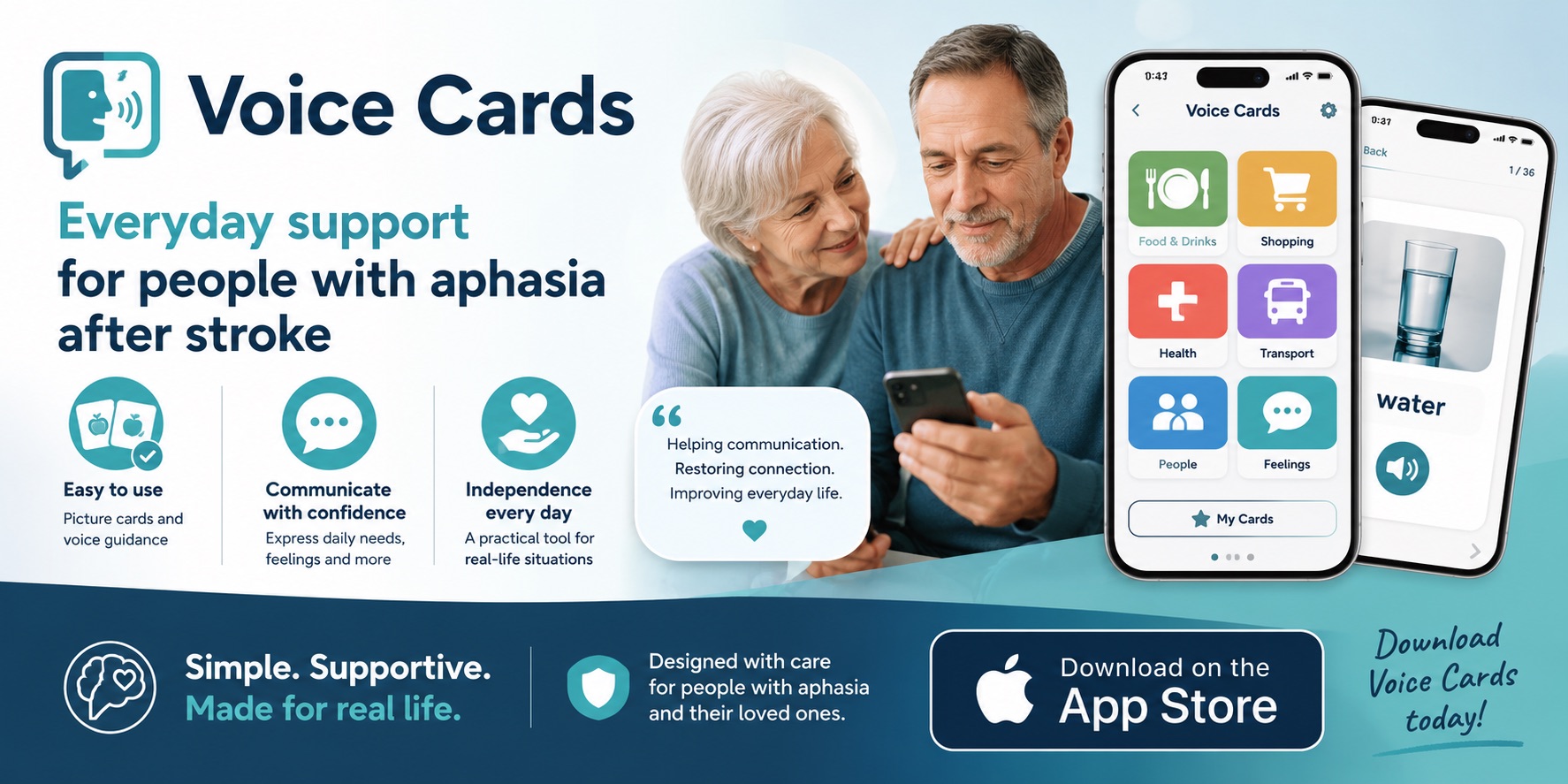
A phone-based card can be part of a broader communication toolkit. The guide to simple apps for aphasia and everyday communication explains how stored phrases and visual supports can be used outside medical settings as well.
FAQ
Can aphasia affect an eye test result?
Aphasia can affect how a person responds to instructions or names what they see. Telling the optometrist about aphasia helps the professional choose a response method that separates language difficulty from the visual task.
Should a family member answer the health questions?
Only when the person with aphasia wants or needs that support. Questions should still be directed to the person first, with time and accessible choices.
What should be written down before leaving?
At minimum: the prescription or result provided by the practice, any follow-up recommendation, what has been ordered, the total agreed price and the collection or review date.