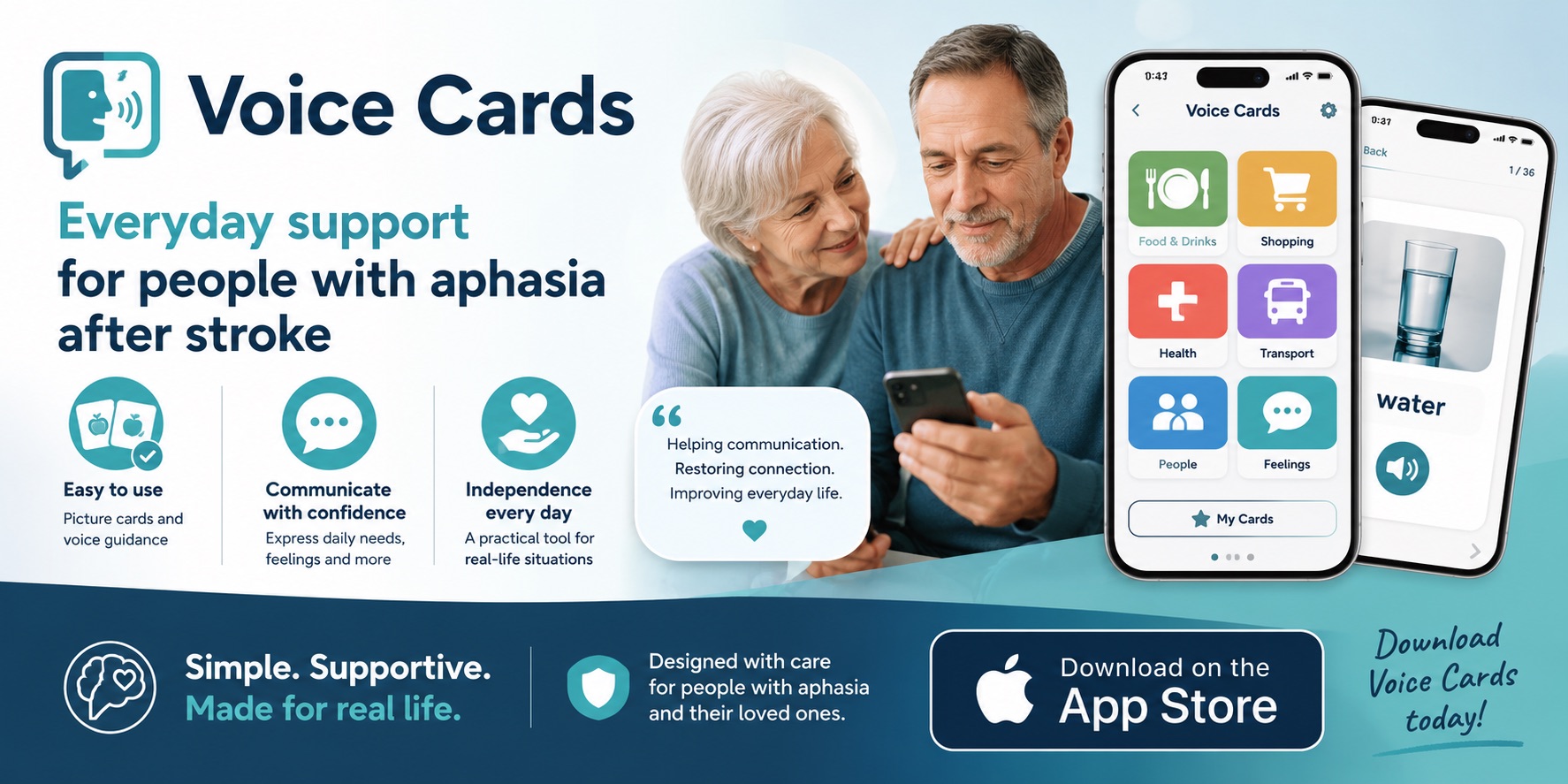
Parenting with aphasia is still parenting. Communication may take more time or need different tools, but aphasia does not remove an adult’s knowledge of their child, their family role, or their right to be included in routines, school communication, and decisions. The most useful supports make the parent’s message easier to express and understand without automatically transferring authority to a spouse, relative, teacher, or caregiver.
Protect the parenting role
Aphasia can affect speaking, understanding, reading, or writing. It does not by itself tell you what a parent understands about their child, what values they hold, or what decisions they can make. Family members and professionals should speak directly to the parent, allow time, and offer accessible ways to communicate.
The National Aphasia Association’s resource on parenting with aphasia recommends practical supports such as visual schedules, shared planners, image-and-keyword journals, communication agreements, and technology that can help a parent stay involved. The aim is participation—not pretending that communication is effortless and not pushing the parent to the edge of family life.
Use adult language and adult respect. Do not discuss the parent as though they are absent. If a school employee asks the other parent a question, redirect gently: “Please give Sam time to answer. You can write the choices if that helps.”
Choose supports that fit the child’s age
The communication tools may change as children grow, but the principle stays the same: make the interaction accessible while preserving the parent’s real role.
Young children
Use pictures and predictable routines. A parent might point to pictures for “shoes,” “breakfast,” “school,” and “bedtime,” or use a two-choice board for a snack or story. Shared songs, play, drawing, gestures, and looking at picture books can carry connection even when sentences are difficult.
School-age children
A weekly calendar can show school days, activities, homework, and family plans. Children can learn to ask one question at a time, wait, and accept answers through speech, writing, gesture, drawing, or pointing. The existing guide on helping children communicate with a parent who has aphasia focuses on age-appropriate explanations and conversation strategies; this article focuses on the parent’s active role in managing family life.
Teenagers
Teenagers need privacy and growing independence, while parents still need accessible ways to discuss schedules, expectations, money, transportation, friends, and safety. Share the topic and choices before a difficult conversation. Let the parent prepare key points. Avoid turning the teenager into the parent’s interpreter or communication manager.
Adult children
When children are adults, aphasia can still change family patterns. An adult child may begin helping with calls or paperwork, but support should be agreed rather than assumed. The parent remains a parent and an adult with their own preferences, boundaries, and relationships.
Make family routines easier to communicate
Routines reduce the number of messages that must be created from scratch. A visible family board can show who is doing what and when. Keep it simple enough to use every day.
- Morning: pictures or keywords for wake up, clothes, breakfast, bag, medication handled by the responsible adult, and departure time.
- After school: snack, homework, activity, screen time, dinner, and tomorrow’s items.
- Evening: bath, story, lights out, next-day plan, and any family check-in.
Use names, short phrases, dates, color, and recognizable icons. Too much decoration can make the important information harder to find. The parent should help choose the layout and vocabulary. A picture-based communication board can also contain family-specific people, places, activities, feelings, and routine words.
For decisions, present a manageable number of real options. “Soccer or art after school?” with two written words or pictures is clearer than “What do you want to do about activities this year?” Choices should support communication, not manipulate the answer.
Manage school communication
School systems often send long emails, portals, forms, and rapid messages. Decide which channel is most accessible to the parent. Possibilities include a short email summary, bullet points, a printed note, a scheduled video call, or a shared calendar.
Write an access note for the school
With the parent’s permission, a short note can say:
I am a parent with aphasia. Please address me directly. Use clear subject lines and short bullet points. Send meeting topics in advance. During conversations, allow extra response time, write key words, and confirm decisions before moving on.
This communicates what helps without sharing unnecessary private information. The guide to writing emails with aphasia offers templates and ways to build messages from keywords. For phone, text, and app access, see how to simplify smartphone communication without taking control.
Reduce portal overload
Choose one place for important dates. A support person can help locate the information, but the parent decides what reminders they want and who may access the account. Avoid sharing passwords casually. Screenshots of the relevant line may be easier to review than an entire portal page.
Participate in meetings and family decisions
Preparation can make a parent-teacher meeting or family discussion more accessible. Ask for the agenda, names, and main questions ahead of time. The parent can prepare three priorities and any questions in speech, writing, pictures, or a phone note.
During the meeting:
- use one speaker at a time;
- state the topic before adding details;
- write important names, dates, choices, and actions;
- ask one question, then wait;
- offer “yes,” “no,” and “not sure” when appropriate;
- do not assume a quick yes or no is reliable in every situation; and
- finish with a short written summary of what was decided.
When an answer matters, use the strategies in confirming what a person with aphasia really means. Repeat the choice in a different form and verify the final message rather than accepting a hurried response.
The Aphasia Institute’s Supported Conversation for Adults resources describe acknowledging competence and using written keywords, gestures, drawings, pictures, and verification. Those principles fit school and family meetings well.
Share responsibilities without erasing a parent
Families may need to redistribute tasks. One adult may handle a fast school call while the parent with aphasia prepares the questions. Another person may enter dates into the calendar while the parent chooses priorities. Sharing the mechanics of a task is different from taking the parent’s place.
Have an explicit agreement:
- Which tasks does each person want to lead?
- Which tasks need communication support?
- When should a partner step in?
- How will the parent confirm a decision?
- What information stays private?
The article on staying partners when aphasia changes a marriage offers ideas for protecting the couple relationship. For administrative tasks, help with calls and forms without taking over applies the same autonomy principle.
Three practical scenarios
Scenario 1: A message from the teacher
A teacher sends a long email about an upcoming project. Alex’s partner does not answer automatically. Instead, the partner highlights the deadline, required materials, and one question. Alex reads the shorter version, chooses a response from two drafted options, edits a keyword, and sends it from Alex’s own account. The partner helped with access; Alex remained the parent communicating with the school.
Scenario 2: The morning routine
Priya and her eight-year-old use a six-picture morning board. Priya points to the next item and checks it off with the child. When the routine changes, Priya adds a picture of the dentist and the new departure time. Her spouse does not narrate every instruction. The board makes Priya’s guidance visible and predictable.
Scenario 3: A family decision
The family is choosing between two weekend plans. Before dinner, Mateo receives photos, cost, travel time, and the children’s preferences on one page. During the discussion, everyone speaks one at a time. Mateo points to an option, then adds a concern by typing “too late.” The family changes the return time and asks Mateo to confirm the complete plan.
Support communication and autonomy
The ASHA aphasia guidance emphasizes person-centered goals, participation, and the role of communication partners and environments. At home, that means asking what support the parent wants rather than deciding for them.
- Speak to the parent directly and use an ordinary adult tone.
- Give the topic and enough time before expecting an answer.
- Use speech, writing, pictures, gesture, drawing, and technology as equal communication routes.
- Ask permission before finishing a sentence or sending a message.
- Include the parent in conversations with children rather than reporting the outcome later.
- Make support adjustable. A parent may want more help on a rushed day and less at another time.
- Keep family disagreements separate from aphasia. Difficulty saying a message is not consent to someone else’s choice.
The guide to support without pressure or taking over offers additional language for respectful encouragement.
Common mistakes
- Talking only to the other parent. Address the parent with aphasia and make the exchange accessible.
- Treating slow communication as lack of interest. Ask about the preferred format and allow preparation time.
- Turning a child into an interpreter. Children can learn supportive habits, but they should not carry adult communication responsibilities.
- Using fake choices. Offer only options the family can genuinely accept.
- Correcting every word during family time. Focus on the message and relationship unless the parent asks for help.
- Making every routine into practice. Breakfast, homework, and bedtime are family life, not constant tests.
- Assuming one tool always works. Speech may work in one moment, while writing, pictures, or extra time works better in another.
- Leaving the parent out “to make things easier.” Efficiency should not erase participation in meaningful decisions.
Parenting communication checklist
- Choose one current parenting situation to make more accessible.
- Ask the parent what role and support they want.
- Create a short routine board, shared calendar, or keyword page.
- Tell schools and activity leaders how to communicate directly and accessibly.
- Send agendas and questions before meetings.
- Use one speaker, clear choices, and written summaries.
- Verify important decisions with the parent.
- Keep children out of adult interpreter roles.
- Review the arrangement when family needs change.
For larger family discussions, the article on including a person with aphasia in group conversations explains turn-taking, topic-setting, and message verification. Shared reading supports can also make school notices, children’s books, and family information easier to enjoy together.
When professional support may help
A speech-language pathologist can help a family identify communication supports for real parenting situations, such as preparing for a school meeting or building a family vocabulary page. A school counselor, teacher, or accessibility coordinator may help arrange an accessible communication method. Family counseling may be useful when everyone needs a supported place to discuss changing roles, provided the professional can communicate accessibly with the parent who has aphasia.
This is general education, not custody, legal, or individualized family advice. When a decision has formal legal consequences, families can seek an appropriate qualified professional while still making communication accessible to the parent.
Frequently asked questions
Does aphasia mean a person cannot make parenting decisions?
No. Aphasia is a communication condition and does not by itself determine a person’s decision-making ability. Make information accessible, provide time, and verify the person’s message.
Should children correct a parent’s speech?
Usually the message and relationship should come first. A child can ask a respectful clarifying question, but should not be responsible for constant correction. Follow the parent’s preference.
What if school staff keep speaking to the other parent?
Use a brief written access request, redirect questions to the parent with aphasia, and ask for keywords or written choices. End meetings with a summary confirmed by that parent.
Can technology help with parenting communication?
Yes. Shared calendars, saved message templates, speech-to-text, text-to-speech, photos, and reminders can reduce communication load. The parent should choose which tools and who may access them.
How can a co-parent help during a disagreement?
Slow the exchange, identify one topic, write the options, and separate communication help from persuasion. Ask what support is wanted and verify the final position.
A calm next step
Pick one recurring family moment—morning preparation, a school email, homework, bedtime, or a weekly planning talk. Ask the parent with aphasia what would make that moment easier. Build one small support together, try it for a week, and keep only what protects both communication and the parent’s real role.