When a person with aphasia says the wrong word, the most useful goal is usually not to force an immediate perfect correction. The goal is to repair the message so both people understand what was meant. Conversation repair can use extra time, a second attempt, gesture, writing, drawing, pointing, yes/no choices or a short confirmation from the communication partner.
Aphasia can make a familiar word difficult to retrieve even when the person knows exactly what they want to communicate. Sometimes a related word appears instead. Sometimes a sound is close but not correct. Sometimes the person starts a sentence, notices that the message is going wrong and stops. These moments can feel frustrating, but they do not mean the conversation has failed.
What does “conversation repair” mean in aphasia?
Conversation repair is simply the process of fixing a misunderstanding. Everyone does it: we repeat ourselves, rephrase a sentence or point to what we mean. Aphasia can make repair more frequent and may require more than one route to the same idea.
A repair might sound or look like this:
- trying the word again after a short pause;
- describing the object instead of naming it;
- pointing, gesturing or showing a photo;
- writing the first letter or a key word;
- choosing between two written or spoken options;
- the listener repeating what they think they understood;
- moving on temporarily and returning to the word later.
Why the wrong word can still contain useful information
A substituted word is not always random. A person may say a word from the same category, a word with a similar sound, or a very general word such as “thing”. Instead of treating that response as useless, the listener can use it as a clue.
If someone says “fork” while pointing toward a cup, the important question is not “Why did you say fork?” but “Are you asking for the cup?” A short confirmation can protect the flow of the conversation without turning every mistake into a test.
A simple repair sequence for everyday conversations
- Pause. Give the person a few extra seconds before supplying a word.
- Confirm the topic. Make sure both people are talking about the same person, place or task.
- Try one alternative route. Gesture, point, write a keyword or show a choice.
- Confirm the message. Say what you think you understood in a short sentence.
- Move on when the meaning is clear. Perfect wording is not always necessary for successful communication.
What communication partners can avoid
Rapid-fire guessing can make the situation harder. So can interrupting after the first pause, finishing every sentence, asking several questions at once or pretending to understand when the message is still unclear. A better approach is calm, specific and collaborative.
Instead of asking “What are you trying to say?” repeatedly, try a narrower question such as “Is it about tomorrow’s appointment?” or “Do you mean the blue cup?” This reduces the amount of language that has to be generated at once.
When writing or pictures can help
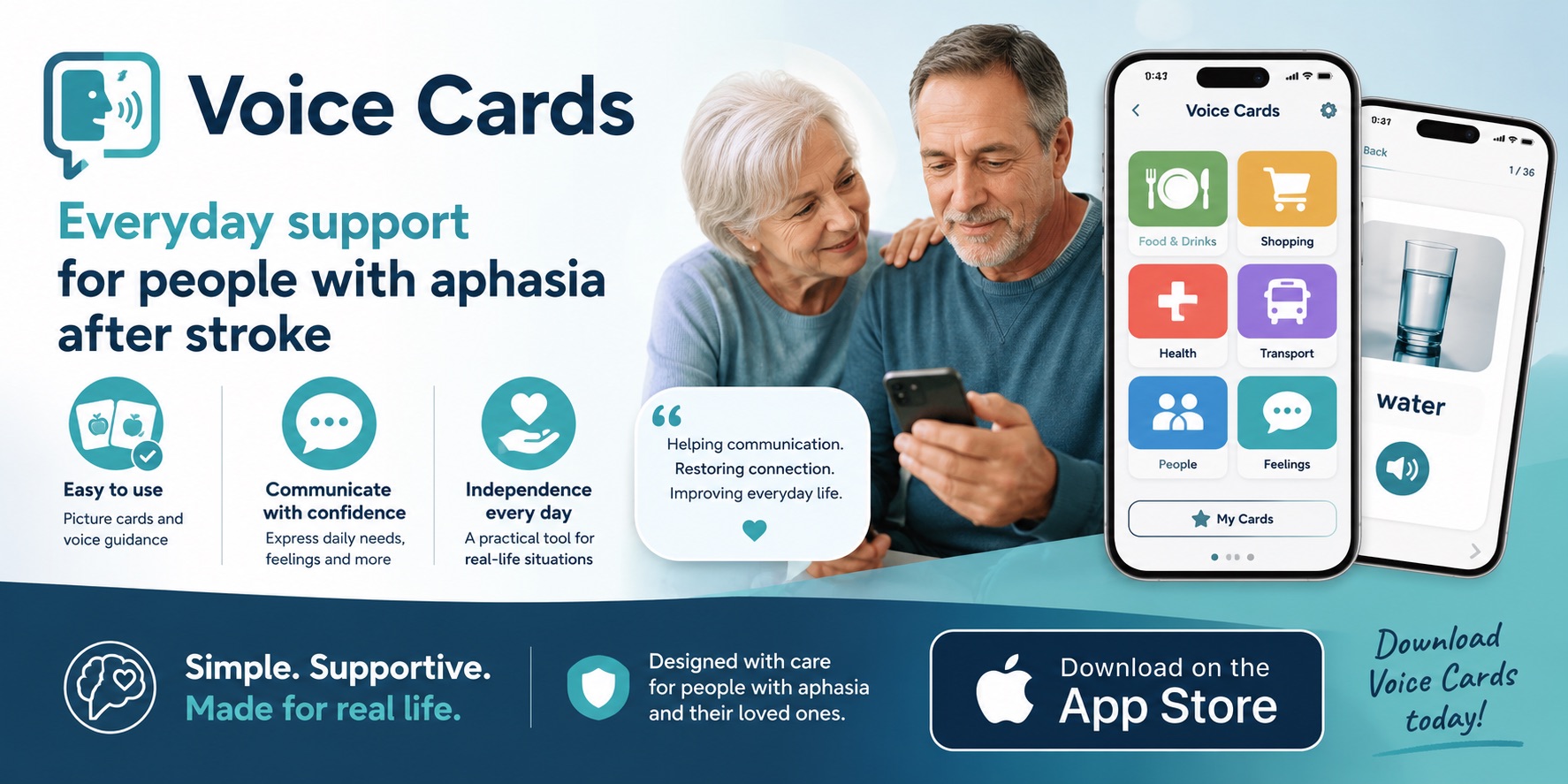
Some people with aphasia find that one communication channel works better than another on a particular day. Spoken naming may be difficult while reading a short word is easier. Another person may recognize a photo faster than written text. That is why a repair strategy can combine speech with a notebook, phone photos, simple drawings or communication cards.
The best method is individual. A strategy that helps one person may be distracting for another. The useful question is: does this method make the message easier to send and easier to confirm?
Repair is part of conversation, not a test
Everyday communication is about sharing decisions, stories, needs and feelings. If the correct noun does not appear but the message becomes clear through a gesture or description, the conversation has still succeeded.
For broader context, read our guides about communication fatigue and practical everyday communication with aphasia. They show why pace, environment and the number of competing demands can change how easily words are available.
Frequently asked questions
Should I immediately give the missing word?
Not always. Some people prefer a little time to try independently. Others welcome a cue. Ask the person what kind of help is useful and avoid assuming that one approach works in every conversation.
Is it helpful to correct every wrong word?
In ordinary conversation, understanding the intended message is often more important than correcting every error. Different goals may apply in a clinical therapy session, but everyday conversation should not automatically become a language test.
What if neither person can work out the message?
Change the route. Use a photo, written choices, gesture, a calendar, a map or another concrete reference. If the topic is not urgent, it can also help to return to it later.
This article is general educational information about communication and does not replace individual assessment or advice from a qualified speech and language professional.
Related guides
- Going to the Cinema or Theatre With Aphasia: Tickets, Accessibility, Breaks and Conversation Before the Show
- Hiring a Plumber or Repair Person With Aphasia: Photos, Written Quotes and Making Home-Service Decisions
- Doctor Appointments With Aphasia: How to Prepare, Ask Questions, and Stay in the Conversation