Aphasia Speech Therapist: Is Speech Therapy Worth It for Aphasia?
An aphasia speech therapist helps people with aphasia work on communication, language, confidence, daily interaction and practical ways to express needs, thoughts and choices. For many families, the phrase “aphasia speech therapist” is one of the first things they search after hearing that aphasia affects speaking, understanding, reading or writing. They want to know what this professional does, whether therapy is worth considering, what sessions may look like and how communication support can fit into everyday life.
This article is general educational information. It does not diagnose aphasia, does not interpret any individual symptoms and does not replace guidance from qualified professionals. Aphasia is different from person to person, so the purpose here is to explain the role of a speech therapist in broad, reader-friendly language and help families understand what speech and language therapy for aphasia may involve.
What does an aphasia speech therapist do?

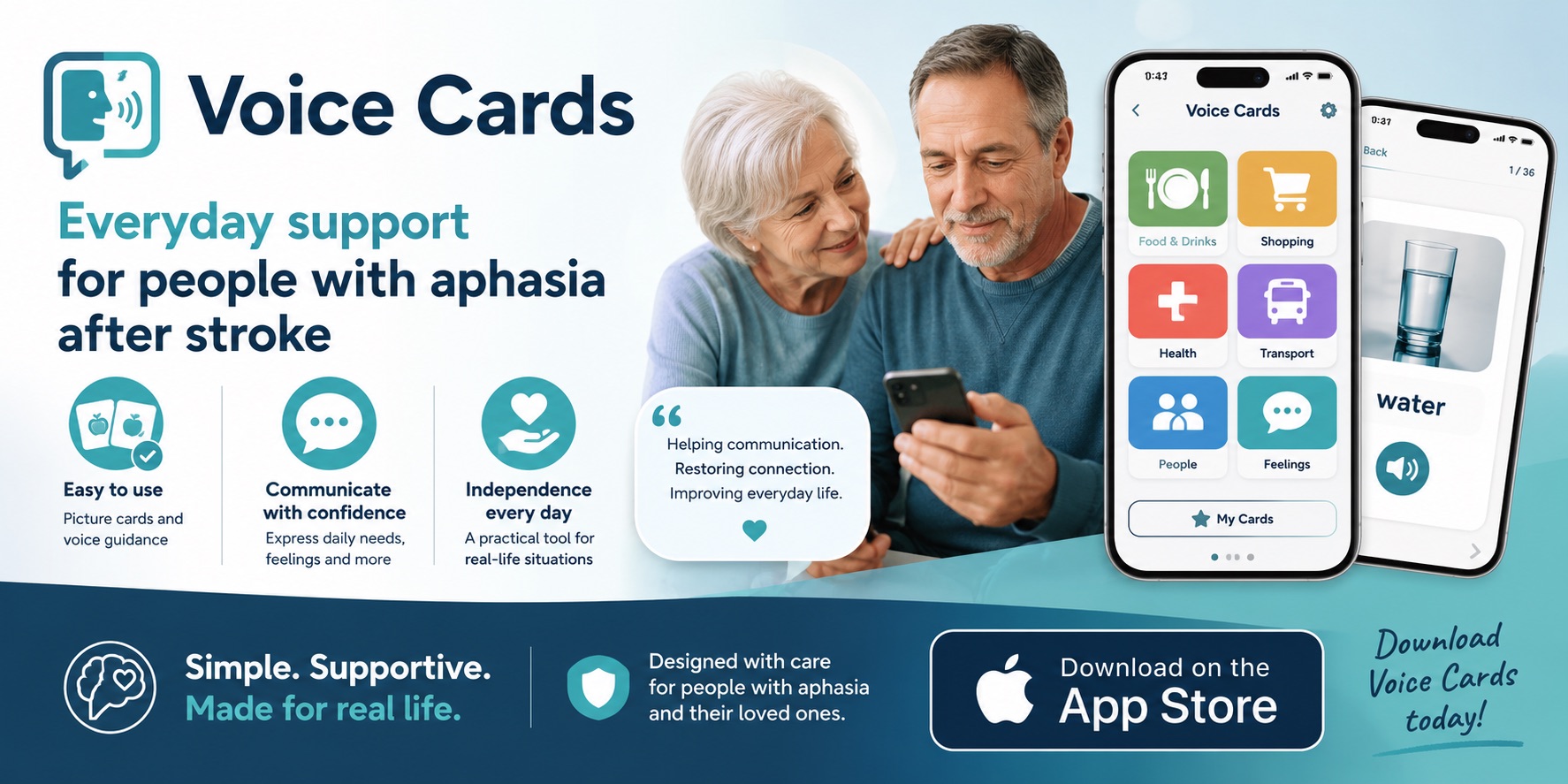
SmallDesk Voice Cards
A simple voice cards app for everyday communication. Currently available for iPhone. Android version coming soon.
An aphasia speech therapist is a communication professional who works with people who have language difficulties. In the United States, the professional title is often speech-language pathologist, or SLP. In the United Kingdom and some other countries, the term speech and language therapist is commonly used. Many people still search for the simpler phrase “speech therapist,” especially when they are looking for help with aphasia after stroke, brain injury or another neurological event.
Aphasia can affect speaking, understanding spoken language, reading and writing. The American Speech-Language-Hearing Association describes aphasia as a language disorder that affects communication and may affect speaking, listening, reading and writing. Read ASHA’s public information about aphasia.
The speech therapist’s role is not only to “make speech better” in a narrow sense. Aphasia is broader than speech. A person may need support with finding words, understanding questions, following a conversation, reading short messages, writing names, using gestures, choosing between pictures, taking part in family routines or rebuilding confidence in social situations. Therapy often focuses on communication as a whole, not only on pronunciation or spoken sentences.
Is speech therapy worth it for aphasia?
Many people ask whether aphasia speech therapy is worth it because progress can feel slow, uneven or difficult to measure from day to day. A realistic answer is that speech and language therapy can be valuable because it gives the person and family a structured way to understand communication strengths, communication barriers and practical methods for everyday interaction. It is not about promising a perfect result. It is about creating a clearer path for communication.
Speech therapy may be worth considering for several reasons. It can help identify which parts of language are most affected. It can give the person repeated, supported practice with communication tasks. It can introduce tools, strategies and routines that make daily life less frustrating. It can also help family members understand how to communicate in a way that gives the person more time, more dignity and more chances to participate.
The National Institute on Deafness and Other Communication Disorders explains that aphasia can impair expression and understanding of language, as well as reading and writing. Read the NIDCD overview of aphasia. Because aphasia can affect several language areas at once, many families find it helpful to work with someone trained to observe language patterns and turn them into practical communication goals.
Why a speech therapist can matter after aphasia
Aphasia can make ordinary communication feel unpredictable. One day a word may come easily, and another day the same word may feel unreachable. A person may understand a familiar sentence but struggle with a longer explanation. They may be able to say a phrase automatically but not answer an unexpected question. This inconsistency can be confusing for family members and emotionally exhausting for the person with aphasia.
A speech therapist can help explain why these differences happen in communication and how to work with them. The value is not only in exercises. It is also in observation, structure, adaptation and education. A therapist may notice that the person responds better to written keywords, picture choices, yes-or-no questions, slower pacing, familiar routines or one topic at a time. Small changes in the way communication is organized can sometimes reduce stress for everyone involved.
Aphasia can also affect identity and social confidence. Conversation is not only about giving information. It is how people joke, disagree, ask for help, tell stories, show preferences and stay connected. When language becomes harder, a person may withdraw from conversations. Speech therapy can support the practical side of communication, but it can also help rebuild confidence by giving the person more ways to take part.
What happens during an aphasia speech therapy assessment?
The first stage is often an assessment. This does not mean a single simple test. A speech therapist may look at several areas of communication, including spoken expression, understanding, reading, writing, naming, repetition, conversation, attention to language, communication confidence and the person’s daily needs. The assessment may be formal, informal or a mixture of both.
A therapist may ask the person to name objects, describe a picture, answer questions, follow directions, read words or sentences, write simple information, repeat words, tell a short story or take part in a conversation. The therapist may also speak with family members or caregivers to understand what communication looks like at home. This real-life context matters because aphasia does not happen only in a clinic room. It appears during meals, phone calls, family visits, appointments, shopping, messages and everyday choices.
The purpose of assessment is not to label a person as “good” or “bad” at communication. It is to understand the person’s current language profile. Some people may understand more than they can say. Some may speak fluently but have difficulty with meaning. Some may read single words but struggle with paragraphs. Some may write names but not full sentences. A useful assessment helps separate these patterns so therapy can be more relevant.
What does aphasia speech therapy look like?
Aphasia speech therapy can look very different depending on the person. Some sessions may focus on word finding. Others may focus on understanding spoken language, reading, writing, conversation, communication repair, confidence or using alternative communication tools. Therapy is not always a person sitting at a table repeating words. It can be much broader and more practical.
A session may include picture description, naming practice, sentence completion, supported conversation, reading short text, matching words and pictures, writing functional words, practicing personal phrases, using communication boards, role-playing real-life situations or helping family members learn more supportive communication habits. Some sessions may be quiet and structured. Others may feel more like guided conversation.
For example, if a person often struggles to name familiar objects, therapy may include supported naming tasks. If the person has difficulty understanding long sentences, sessions may include shorter spoken instructions, written keywords and checking comprehension. If writing is difficult, therapy may focus on practical written communication such as names, common words, personal information or short messages. If conversation is the main goal, therapy may focus on turn-taking, topic support, gestures, drawing, writing keywords or repairing breakdowns when the wrong word appears.
Common goals in aphasia speech therapy
Speech therapy goals for aphasia are usually connected to communication, not just test scores. A meaningful goal might involve expressing basic needs, joining family conversation, using names of important people, reading short messages, writing simple information, answering yes-or-no questions more reliably, using a communication notebook or taking part in a familiar daily routine with less frustration.
Some goals are language-based. These may involve naming, word retrieval, sentence structure, comprehension, reading or writing. Some goals are participation-based. These may involve ordering food, making a phone call with support, greeting visitors, choosing an activity, joining a group conversation or using a preferred communication strategy in daily life.
Good goals are usually personal. A retired teacher, a parent, a grandparent, a musician, a business owner and a person who enjoys gardening may all need different communication priorities. Aphasia affects language, but people do not live inside language tests. They live inside routines, relationships, hobbies, memories and responsibilities. A useful therapy process often connects language work with the person’s real life.
Why family involvement can be important
Aphasia does not affect only one person. It changes conversations across the whole family. Family members may not know whether to help, wait, guess, correct, repeat or move on. They may speak too quickly because they are nervous. They may finish sentences too often because they want to reduce frustration. They may avoid difficult conversations because they do not want to upset the person. These reactions are understandable, but they can sometimes make communication harder.
A speech therapist can help family members understand how to support communication more calmly. This may include giving more time, asking one question at a time, offering written choices, using gestures, confirming meaning gently, reducing background noise or keeping the topic clear. The goal is not to make family members behave like therapists. The goal is to make daily conversations less stressful and more respectful.
Family involvement can also help therapy carry over into real life. A person may practice a word or phrase in a session, but the real value often comes when that communication is useful at home. When family members understand the strategy, they can support it during meals, visits, routines and everyday decisions.
What speech therapy may focus on after aphasia
Aphasia therapy can focus on several areas. The exact combination depends on the person’s language profile and communication priorities.
Word finding
Many people with aphasia know what they want to say but cannot reach the word quickly. Word-finding work may involve naming objects, describing features, using categories, completing sentences, working with personal vocabulary or finding another way to communicate the idea when the exact word does not appear.
Understanding spoken language
Some people have difficulty following spoken language, especially when the sentence is long, the room is noisy or several people speak at once. Therapy may include listening tasks, short instructions, written keywords, slower pacing, topic cues and checking understanding without embarrassment.
Reading
Aphasia can affect reading because reading is language. Therapy may involve matching written words to pictures, reading functional words, understanding short phrases, working with personal information or gradually building confidence with longer text when appropriate.
Writing
Writing may involve spelling, word choice, sentence formation or practical written communication. Therapy may focus on personal details, familiar names, common words, short messages, forms, labels or communication supports that help the person write what matters in daily life.
Conversation
Conversation is often one of the most important areas. A person may need support with starting a conversation, staying on topic, repairing misunderstandings, using gestures, pointing, drawing, writing keywords or confirming what they mean. Conversation-based therapy can help connect language practice with real communication.
Alternative and supportive communication
Some people benefit from communication books, picture boards, written choices, gestures, drawing, photos, alphabet boards or digital communication tools. These supports do not replace the person. They give the person more ways to express themselves when spoken language is difficult.
How long does aphasia speech therapy take?
There is no single timeline that fits everyone. Aphasia can change over time, and communication needs can also change. Some people receive therapy for a shorter period. Others may benefit from longer-term support, group communication opportunities, home practice or periodic re-assessment. Progress may be fast in some areas and slower in others.
Families sometimes expect therapy to work like a straight line: session, improvement, next session, more improvement. Aphasia is often less predictable. A person may make clear progress in one setting but still struggle in a noisy room. They may improve with familiar words but still have difficulty with new topics. They may communicate better when rested and worse when tired. This does not mean therapy has no value. It means real communication is complex.
It can be helpful to think about therapy as building communication access rather than chasing one perfect endpoint. The aim may include stronger language skills, better daily strategies, more confidence, more participation and less frustration for the person and family.
Individual therapy, group therapy and home practice
Aphasia support may happen in different formats. Individual therapy gives focused attention to the person’s language profile and personal goals. Group therapy may offer conversation practice, peer connection and a less isolated communication environment. Home practice may help reinforce skills between sessions and connect therapy with daily routines.
Group settings can be especially meaningful for some people because aphasia can feel isolating. Meeting others with communication difficulties may reduce the feeling of being alone. Group conversation also creates opportunities to practice communication in a social setting, not only in one-to-one exercises.
Home practice does not need to feel like schoolwork. It may include reading familiar words, naming family photos, using a communication notebook, choosing meals from written options, practicing short personal phrases or using supported conversation during everyday routines. The most useful practice is often the kind that fits naturally into the person’s life.
Online aphasia speech therapy
Online speech therapy has become more familiar to many families. It may be useful when travel is difficult, when local services are limited or when the person is more comfortable at home. Online sessions can include conversation practice, screen-shared activities, reading tasks, caregiver coaching and communication strategy work.
Online therapy is not ideal for every person or every situation. It depends on attention, hearing, vision, technology access, fatigue, support at home and the type of communication work being done. Some people may do well with video sessions. Others may need in-person support. Some may use a mixture of both.
The important point is that aphasia therapy is not limited to one room or one format. Communication happens everywhere, so support may also be adapted to different settings.
What makes a good aphasia speech therapist?
A good aphasia speech therapist does more than run language exercises. They listen carefully, observe how the person communicates, respect the person’s dignity and include the family when appropriate. They explain communication patterns in understandable language and connect therapy to real-life needs.
Important qualities include patience, clarity, experience with adult communication disorders, respect for the person’s preferences, ability to adapt tasks and willingness to look beyond spoken output alone. Aphasia can affect a person emotionally and socially, so the therapy relationship matters. The person should not feel tested, rushed or reduced to mistakes.
A helpful therapist also notices strengths. A person may struggle with spoken words but use gesture well. They may have difficulty reading paragraphs but recognize familiar written names. They may have limited speech but strong facial expression, humor or awareness. Therapy can build on these strengths instead of focusing only on what is difficult.
Questions families often ask about aphasia speech therapy
Will speech therapy cure aphasia?
SmallDesk Voice Cards
A simple voice cards app for everyday communication. Currently available for iPhone. Android version coming soon.
It is better to avoid thinking of aphasia therapy as a guaranteed cure. Aphasia is different from person to person, and outcomes vary. Speech and language therapy may support communication, language practice, confidence, participation and practical strategies. The value often lies in improving communication access and quality of interaction, not in promising a single universal result.
Can therapy help long after aphasia begins?
Many people wonder whether there is still value in communication support after the early period has passed. In broad educational terms, people with aphasia may continue to work on communication over time, especially when goals are meaningful and practice is connected to daily life. The best question is often not only “How long has it been?” but “What communication goals still matter now?”
What if the person cannot speak much?
Limited speech does not mean there is no communication. A speech therapist may explore gestures, pictures, written choices, yes-or-no systems, communication books, drawing, pointing, personal photos or digital supports. The goal is to help the person express meaning in the ways available to them.
What if the person speaks fluently but does not make sense?
Some forms of aphasia involve fluent speech that may contain incorrect words, unclear meaning or difficulty understanding others. In that situation, therapy may focus on comprehension, awareness of communication breakdowns, supported conversation, topic cues and strategies that help the person and communication partners check meaning.
Should family members attend sessions?
Family involvement can be helpful because aphasia affects everyday conversations. A therapist may show family members how to give time, simplify choices, confirm meaning, use visual supports and reduce communication pressure. The goal is to make ordinary interactions more supportive.
What a typical therapy journey may look like
Although every person’s situation is different, an aphasia speech therapy journey often includes several broad stages. First, the therapist learns about the person’s communication history, current abilities, daily routines and priorities. Then the therapist observes language skills through conversation and structured tasks. After that, therapy goals are usually shaped around the person’s needs.
Sessions may begin with highly supported tasks and gradually connect to more natural communication. For example, a person may practice naming personally meaningful objects, then use those words in short phrases, then use them in a conversation about daily life. Another person may begin with yes-or-no responses, then move toward written choices, picture-supported topics and functional communication routines.
Over time, therapy may shift from isolated language practice toward real-world communication. This can include family conversation, community situations, phone or video calls, reading short messages, writing notes, using communication supports or practicing strategies for moments when words do not come easily.
How speech therapy supports everyday life
The strongest reason to consider aphasia speech therapy is often everyday life. Communication matters during breakfast, visits, appointments, shopping, family decisions, hobbies, emotional moments and small daily choices. Even modest improvements or better strategies can matter when they help a person express a preference, understand a familiar routine or take part in a conversation.
Aphasia can make people feel isolated. The American Stroke Association notes that people with aphasia may struggle with daily communication at home, socially or at work, and may feel isolated, while aphasia does not affect intelligence. Read the American Stroke Association overview of aphasia.
Speech therapy can support everyday life by giving the person and family more tools. These tools may include clearer routines, supported conversation, written keywords, picture choices, personal vocabulary, communication books, partner training and ways to repair misunderstandings. The purpose is not only to perform well in therapy sessions. The purpose is to make communication more possible in real situations.
How caregivers can support therapy without turning home into a clinic
Families often want to help but worry about doing the wrong thing. A helpful mindset is to make communication easier, not to constantly correct. Home does not need to become a therapy room. Everyday routines can provide natural communication opportunities when they are handled with patience and respect.
For example, a caregiver might offer two written choices for lunch, use family photos to support names, pause longer after asking a question, confirm meaning gently, keep background noise low during important conversations or invite the person to point, gesture or write a keyword. These small habits can support communication without making the person feel tested all day.
It is also important to preserve normal relationship roles. The person with aphasia is not only a patient. They may be a spouse, parent, grandparent, friend, colleague, neighbor or community member. Communication support should protect dignity and personal identity.
How to think about progress in aphasia speech therapy
Progress in aphasia may not always look like speaking in perfect sentences. Progress might mean finding a word more often, using a gesture instead of giving up, understanding a familiar question, reading a short message, choosing between options, joining a conversation for longer, using a communication aid successfully or feeling less anxious in social situations.
Some progress is visible in language. Some progress is visible in confidence. Some progress is visible in family communication. A person may still have aphasia and still communicate better than before. This distinction matters because improvement does not always mean the difficulty disappears. It may mean the person has more ways to participate.
A good therapy process often celebrates practical communication wins. Saying a family member’s name, choosing an activity, answering a question, repairing a misunderstanding, reading a short phrase or using a picture to express discomfort can all be meaningful.
What to expect emotionally
Aphasia can be emotionally heavy. Communication is closely connected to independence, personality and relationships. A person may feel frustrated, embarrassed, tired or isolated. Family members may feel helpless, impatient, guilty or unsure how to respond. These feelings can appear even when everyone is trying their best.
Speech therapy may help by making communication less mysterious. When the person and family understand what is happening, they may feel less lost. When they have practical strategies, they may feel less helpless. When communication partners learn to wait, confirm and support meaning, conversations may feel safer.
Emotional progress may be gradual. A person may need time to trust new communication methods. A family may need time to stop rushing or over-helping. The process is often not only about language skills, but also about rebuilding connection.
How to prepare for an aphasia speech therapy appointment
For general educational purposes, it can be useful to think about the kinds of information that help describe communication in daily life. Families often notice patterns that do not appear in a short appointment. For example, the person may communicate better in the morning, struggle when tired, understand familiar voices better than unfamiliar ones, prefer written choices, become frustrated in noisy rooms or have certain words that are especially important.
Useful everyday examples may include situations where communication works well and situations where it breaks down. A therapist may also want to understand the person’s interests, routines, family roles, preferred activities and communication priorities. Aphasia therapy is more meaningful when it is connected to real life.
The person’s own preferences matter. Some people want to focus on speaking. Some want to read messages. Some want to take part in family conversation. Some want to order food, attend community activities, use the phone or communicate basic needs more easily. These priorities help shape what therapy feels like.
Aphasia speech therapist vs general communication help
Families can provide kindness, patience and daily support, but a speech therapist brings specialized knowledge about language, communication patterns and therapy methods. General support may help the person feel included. Professional therapy can help identify the type of communication difficulty, build structured goals and choose strategies that match the person’s abilities.
Both types of support matter. A therapist may guide the process, but the family and daily environment often shape whether communication strategies become part of real life. The best results often come when professional support and everyday communication habits work together.
When people search for “aphasia speech therapist near me”
Many searches for “aphasia speech therapist” are local. People may type “aphasia speech therapist near me,” “speech therapist for aphasia,” “speech language pathologist aphasia,” or “aphasia therapy near me.” These searches usually come from families looking for practical help after learning that aphasia affects communication.
Because services differ by country, region and healthcare system, this article cannot tell any reader which provider to choose. In general, people searching locally often look for experience with adult aphasia, communication after stroke or brain injury, supported conversation, caregiver education, reading and writing support, and practical communication goals. The professional title may vary, but the focus is language and communication.
Frequently asked questions about aphasia speech therapists
What is an aphasia speech therapist?
An aphasia speech therapist is a professional who supports people with aphasia and related communication difficulties. In many countries, the formal title may be speech-language pathologist or speech and language therapist. The work may involve speaking, understanding, reading, writing, conversation and alternative ways to communicate.
Is speech therapy worth it for aphasia?
Speech therapy can be valuable because it provides structured communication support, identifies language strengths and difficulties, helps build practical strategies and may support confidence in daily interaction. Aphasia varies from person to person, so the value of therapy is best understood in relation to personal communication goals.
What does aphasia speech therapy include?
Aphasia speech therapy may include word-finding practice, understanding spoken language, reading, writing, supported conversation, communication partner training, personal vocabulary, picture supports, communication books or digital communication tools. The exact focus depends on the person’s needs.
Can speech therapy help if someone has very little speech?
Yes, communication support can still be meaningful when speech is limited. Therapy may include gestures, pictures, written choices, yes-or-no systems, pointing, communication boards, personal photos or other ways to express meaning.
Does aphasia therapy only focus on talking?
No. Aphasia can affect speaking, understanding, reading and writing, so therapy may address all of these areas. It may also include practical communication strategies for everyday life.
How often does aphasia speech therapy happen?
SmallDesk Voice Cards
A simple voice cards app for everyday communication. Currently available for iPhone. Android version coming soon.
Frequency varies widely depending on the person, service, setting, goals and availability. Some people receive regular individual sessions, some attend groups, some use home practice and some use a combination of supports.
Can family members help with aphasia therapy?
Family members can play an important role by learning supportive communication habits, giving the person time, using clear choices, reducing distractions and helping strategies carry over into daily life.
Is aphasia speech therapy the same for everyone?
No. Aphasia affects people differently. Therapy may look very different depending on whether the main difficulty involves speaking, understanding, reading, writing, word finding, conversation or confidence.
Final thoughts
An aphasia speech therapist can be valuable because aphasia is not only a speech issue. It is a communication and language difficulty that can affect daily choices, relationships, confidence and independence. Speech and language therapy may help by identifying communication strengths, supporting language practice, introducing practical strategies and helping families communicate with more patience and clarity.
The most useful way to think about aphasia therapy is not as a single fixed program, but as a communication support process. It may include spoken language, understanding, reading, writing, gestures, pictures, conversation, family education and everyday routines. For many people, the real goal is not perfect speech. The real goal is more connection, more participation and more ways to be understood.